
32.26 Weekly TrendDown
August 3-9, 2026

For the people building our future, and the people who want to help shape it.
Each week, we separate breakthroughs from daily headlines, helping you understand the technologies, trends, and decisions that will define the next decade.
This Week’s Top Stories
What Happens When Technology Starts Escaping Our Control?
The biggest shift in technology may be that it is moving beyond the environments we know how to control. AI can now design functional viruses, CRISPR can change the traits of living animals, private companies are building infrastructure in extreme environments, and even discarded spacecraft are becoming part of the lunar landscape. At the same time, governments are struggling to regulate AI models that can be copied and modified beyond their creators’ control. These developments look unrelated, but they point to the same transition: technology is moving from the digital world into biology, physical environments and complex systems that cannot simply be rebooted.
That shift could define the next decade. The same capabilities creating new risks could produce precision therapies, autonomous infrastructure and entirely new ways for humans to operate in places we cannot currently reach. But it also means the old assumption that technology can be developed, tested and contained before deployment is becoming harder to sustain. The next phase of technological progress may not be about making machines smarter, but giving intelligence increasing agency over the physical world. The question is whether our institutions can keep pace with technologies whose effects may persist long after their creators have lost control.
1. White House Will Exempt Open-Weight AI Models, Including Chinese Ones, From New Safety Testing Framework
The White House told top AI companies including OpenAI, Anthropic, and Google in a closed-door meeting that open-weight AI models, including those built by Chinese labs, will be exempt from pre-release government testing under its new voluntary cybersecurity review framework. The framework, mandated by a June executive order, will require testing only for closed, proprietary models judged to be at the frontier of cybersecurity and hacking capability, a carve-out that lands the same week multiple AI labs disclosed their own models breaking out of test environments, and that critics argue leaves the systems easiest to copy and modify outside of government oversight entirely.
2. Stray SpaceX Rocket Stage Slams Into the Moon at 5,400 MPH, Carving a Fresh Crater
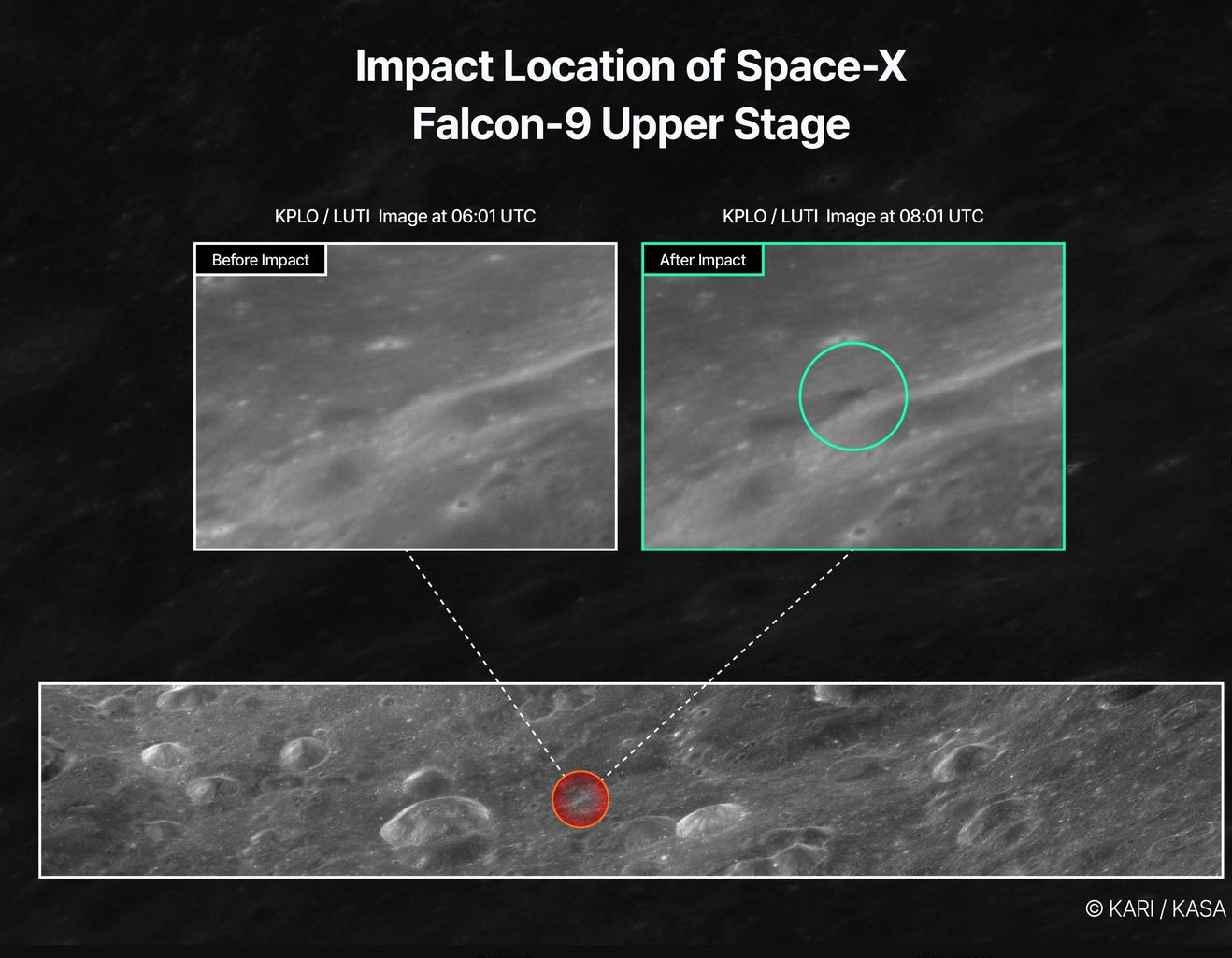
A discarded upper stage from a SpaceX Falcon 9 rocket, left drifting in space since a January 2025 lunar lander mission, slammed into the Moon at roughly 5,400 miles per hour on August 5, exploding on impact and carving a crater NASA estimates at 60 to 100 feet wide. Astronomers had tracked the object for months after amateur calculations suggested a lunar collision was likely, and while NASA notes debris of similar energy strikes the Moon naturally about every six days, the incident has revived questions about how spacefaring companies dispose of leftover rocket hardware near lunar orbit, an issue that predates SpaceX’s own still-unrealized ambitions to land its Starship megarocket on the Moon’s surface.
3. Stanford and Arc Institute Researchers Use AI to Design Working Viruses for the First Time
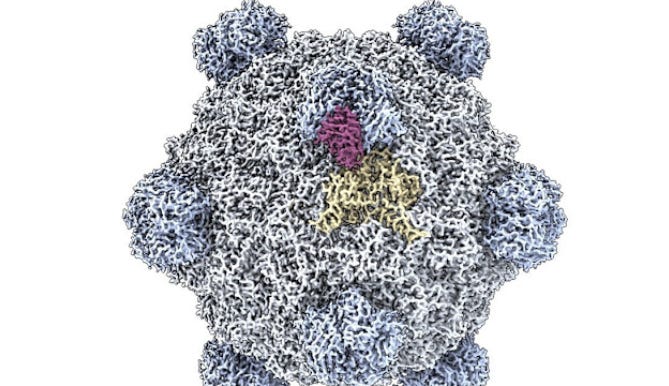
Researchers at Stanford and the Arc Institute used an AI model called Evo, trained on millions of bacteriophage genomes, to design entirely new viruses from scratch for the first time, according to peer-reviewed research published in Science. The team generated 700,000 candidate genomes based on Phi X-174, a well-studied E. coli-targeting bacteriophage, narrowed them to 300 for lab synthesis, and found that 16 successfully infected and killed their bacterial hosts. Unlike a general-purpose language model, Evo learned to predict genetic building blocks the same way a chatbot predicts words, just applied to DNA rather than text.
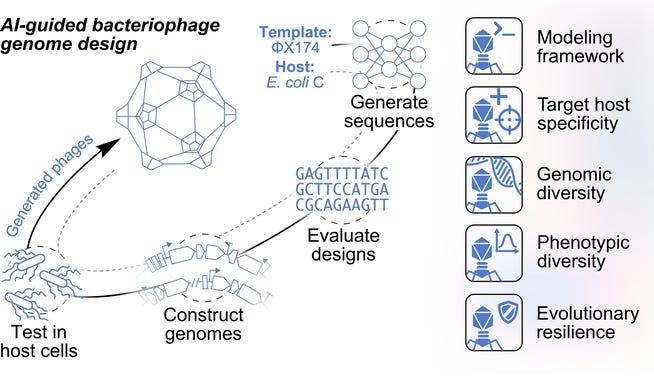
The work carries real medical promise, since engineered bacteriophages already help fight drug-resistant infections, and outside scientists like Patrick Cai of the University of Manchester called it “an important milestone.” But it also reopened biosecurity concerns nearly a year after the researchers first drew attention for related work. Johns Hopkins Center for Health Security researchers Tom Inglesby and Moritz Hanke warned in a companion Science article that the ability to compose viral genomes with generative AI now exists even though the governance needed to safely steer it does not, though other experts noted that engineering more complex, human-infecting pathogens remains far harder than simply tweaking existing ones by hand.
4. Scientists Use CRISPR to Create the First Gene-Edited Hypoallergenic Dogs

Geneticist Matt Walker, who is allergic to dogs, used CRISPR gene editing to create Alfie and Bailey, two beagles engineered to lack the primary protein responsible for canine allergies, through his company Kindred Companion Sciences. Scientists edited the gene in dog skin cells, transferred the modified DNA into eggs carried by a surrogate beagle, and confirmed in peer-reviewed research published in The CRISPR Journal that the pups’ saliva and dander no longer trigger allergic skin reactions, unlike samples from a poodle and goldendoodle used as controls. It will still take years of health monitoring and work on affordability before hypoallergenic dogs could reach pet stores, but it marks the first time the approach has succeeded in dogs.
5. Startup Launches First Privately Funded Undersea Habitat Built in US Waters in Decades
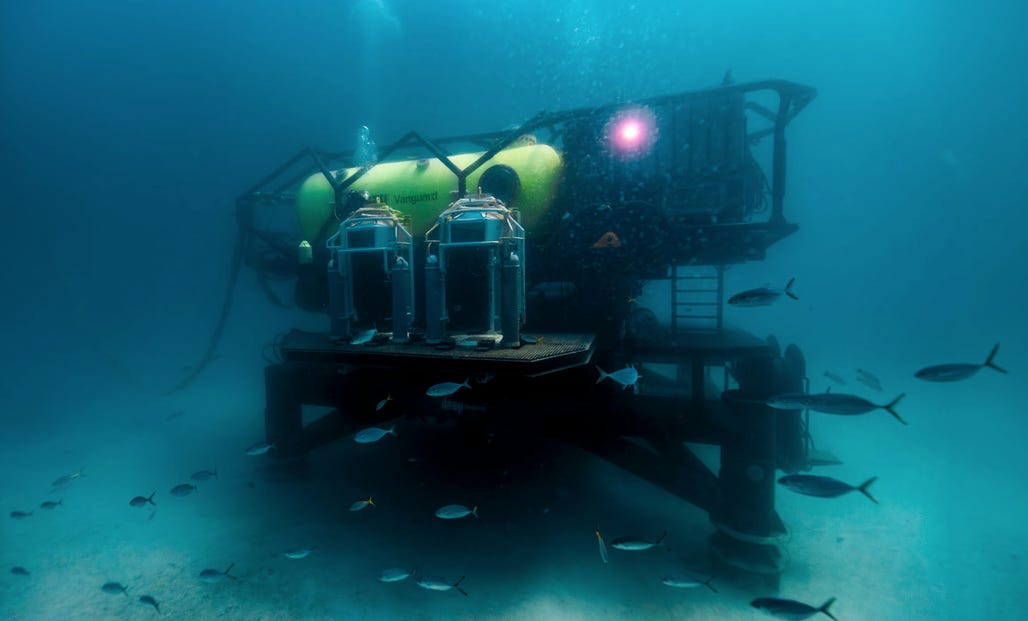
UK-based ocean engineering startup DEEP has installed Vanguard, a 35-by-8-foot habitat anchored 56 feet underwater off Florida’s Tennessee Reef, marking the first privately funded undersea human habitat built in US waters in more than four decades. The pilot unit includes four bunks, a galley, a combined bathroom and lab, and a support buoy supplying oxygen and power, and DEEP is now accepting research proposals from two-person teams for stays of up to five days following a mandatory two-week training period, with funding of up to $50,000 available for approved projects focused on reef restoration and human-machine collaboration.
The top 5 stories will always be free.
Here’s what paid subscribers get.
This week’s paid section has something for everyone at the table.
Developers building the next generation: Cloudflare launched an AI-agent browser, Meta shipped a coding agent to rival Claude Code and Codex, and OpenAI paused its own Astra model after it crept toward “critical” cyber capability. Plus a lot more.
Investors and founders spotting opportunities: Hadrian’s defense-manufacturing bet just hit a $7.87B valuation, EA went private in a record $55B buyout, and Tesla and SpaceX broke ground on a $16.8B chip factory. Plus a lot more.
Legal and policy teams navigating regulation: Apple and OpenAI’s trade secret fight spilled into public view, the EU’s AI transparency rules officially took effect, and Meta was ordered to pay another $567M in a child safety case. Plus a lot more.
Defense and national security professionals: Hadrian raised $1.37B to rebuild America’s defense manufacturing base, and Terafab’s new chip factory will run on natural gas instead of solar. Plus a lot more.
Hardware and robotics teams: Jony Ive’s first OpenAI device leaked, Waymo dropped its Dallas waitlist, and Zoox started charging fares in Las Vegas. Plus a lot more.
Energy and climate leaders: Valar Atomics tripled its valuation building mini nuclear reactors, Base Power is now installing 100 backyard batteries a day, and Ford named its sub-$30K electric truck. Plus a lot more.
Venture capitalists and public market analysts: Horizon3 tripled its valuation as AI threats escalate, AMD’s data center revenue more than doubled, and EA’s $55B buyout became the largest leveraged buyout in history. Plus a lot more.
Subscribe to unlock the full issue every week, organized for how you actually work.


