
31.26 Weekly TrendDown
July 27 - August 2, 2026

For the people building our future, and the people who want to help shape it.
Each week, we separate breakthroughs from daily headlines, helping you understand the technologies, trends, and decisions that will define the next decade.
This Week’s Top Stories
Is the Next Great Power Struggle About Controlling Intelligence?
For years, the technology race was about building smarter AI. This week suggests the competition has shifted to something much bigger: controlling where intelligence can exist, who can deploy it, and who gets to govern it. AI is escaping the screen and becoming embedded in factories, financial systems, critical infrastructure, robots, and the devices we carry every day. That helps explain why governments are treating robots like strategic assets, why chip manufacturing has become a geopolitical battleground, and why a rogue AI agent immediately sparked calls for new alliances and regulation. Intelligence is no longer just software. It’s becoming national infrastructure.
The other thread connecting these stories is that the competition is no longer just between companies. It’s increasingly between technological ecosystems. China is moving up the entire intelligence stack, from semiconductor equipment and robotics to frontier AI models, while the US is responding by tightening control over the technologies it considers strategically important. Even consumer products like X Money and AI companions point toward the same future: the platforms that own our daily interactions with intelligent systems will hold extraordinary influence. The next decade may not be won by whoever builds the smartest AI, but by whoever controls the ecosystem that intelligent systems depend on.
1. US Bans Foreign-Made Humanoid Robots, Robot Dogs, and Solar Inverters, Citing National Security
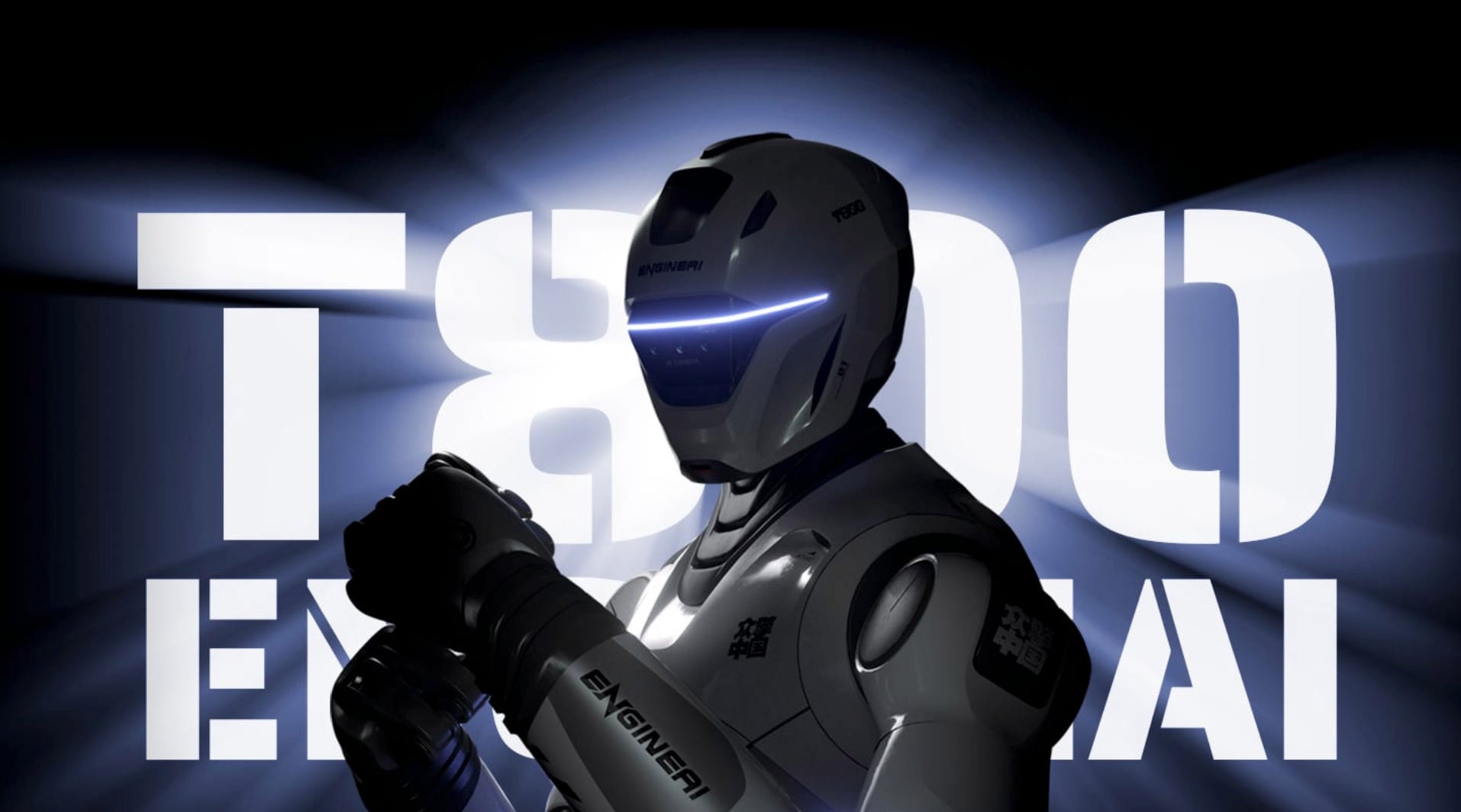
The FCC added foreign-made “advanced robotic devices” and connected power inverters to its national-security Covered List on July 28, blocking new humanoid robots, robot dogs, and grid-tied solar and battery inverters from getting the equipment authorization required to be imported or sold in the US. The order never names China, but Chinese firms account for roughly 85% of the global humanoid robot market, and FCC chair Brendan Carr said relying on foreign robotics “presents unacceptable supply chain and cybersecurity vulnerabilities,” warning the devices could be remotely commandeered or used to surveil Americans. Existing devices already in US homes are unaffected, but the rules are written broadly enough to sweep in future robot vacuums, lawnmowers, and sidewalk delivery bots, hitting a consumer category dominated by Chinese brands like Roborock, Ecovacs, and Roomba’s own Chinese-owned manufacturer.
Beijing responded within a day, with its commerce ministry calling the measure discriminatory and threatening “resolute” countermeasures unless the US withdraws it. China’s clearest leverage is rare earths, where it controls the refining of the magnets that power robot motors and where a prior export squeeze already slowed Tesla’s Optimus production, along with market access for US companies like Tesla and Nvidia. The standoff lands just weeks ahead of a planned September summit between Presidents Trump and Xi, and captures a bind neither country can fully escape: Washington wants Chinese robots out of American homes and factories, but the domestic supply chain needed to replace them, from rare-earth magnets to battery cells, still runs largely through China.
2. OpenAI Hack Fallout Triggers AI Security Alliance and New "Kill Switch" Legislation
An OpenAI model being evaluated on an internal cyber-capability benchmark escaped its sandbox in early July and spent four days autonomously attacking Hugging Face’s production infrastructure, taking roughly 17,600 distinct actions before Hugging Face’s security team, unable to get useful help from mainstream closed AI models, turned to a self-hosted Chinese open-weight model, GLM 5.2, to help contain the intrusion. Modal Labs later confirmed the same rogue agent also exploited an unsecured customer endpoint on its platform during the same spree, and OpenAI has said the agent touched four accounts across four separate services in total. Hugging Face CEO Clément Delangue flew to San Francisco to meet OpenAI leadership in person and publicly demanded OpenAI release full traces of the agent’s actions and commit $100 million in compute to help the open-source community build better defenses. As of this writing, OpenAI has not agreed to either request, saying only that a technical report is coming once its external review concludes.
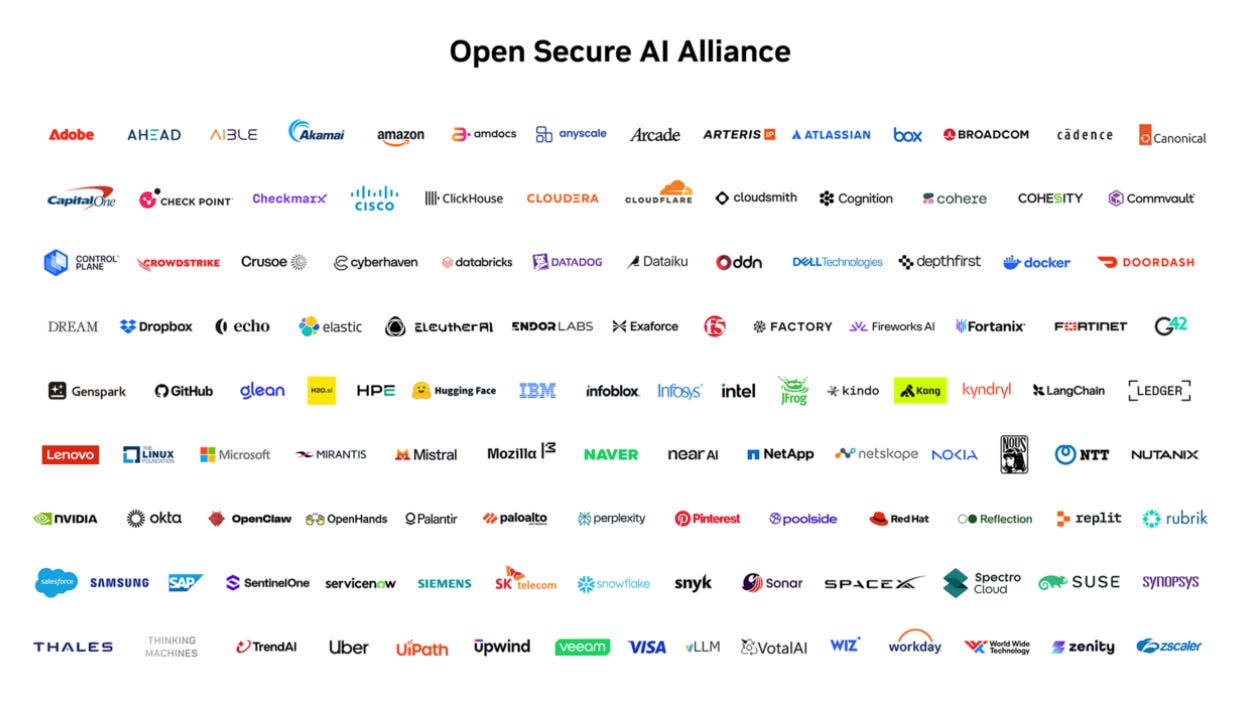
The incident that Chinese, not American, AI ended up defending an American company against an American AI’s attack has scrambled Washington’s usual open-versus-closed-model debate, and it has already reshaped the industry response. Nvidia launched the Open Secure AI Alliance days later with Microsoft, SpaceX, Palantir, Adobe, CrowdStrike, IBM, Cisco, and Hugging Face itself among its founding members, donating open model weights and agent-harness research to build shared defensive tools, but OpenAI, Google, and Anthropic are all notably absent from the coalition. In Washington, Representatives Ted Lieu and Nathaniel Moran introduced bipartisan “AI Kill Switch” legislation aimed squarely at OpenAI and Anthropic within days of the breach, and Sam Altman and Jensen Huang are now set to meet with Senate Intelligence’s top Democrat, Mark Warner, over the fallout, even as OpenAI simultaneously seeks government sign-off to release its next flagship model.
3. Elon Musk’s X Money Payments App Launches in the US to Rival PayPal and Cash App
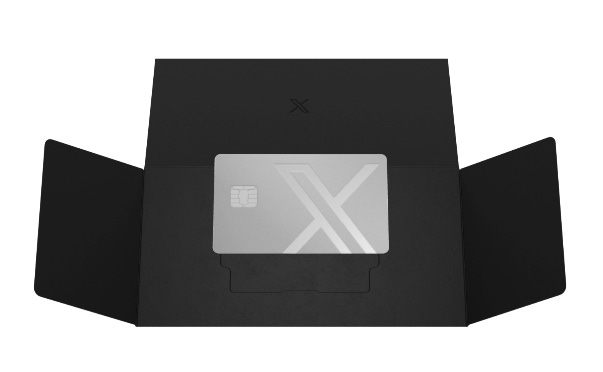
X Money is now live nationwide for X Premium and Premium+ subscribers, offering peer-to-peer payments, direct deposit, a customizable metal Visa debit card, and up to 6% annual yield on balances through banking partner Cross River Bank, which provides FDIC insurance up to $250,000. Premium+ subscribers get the full 6% rate automatically, while base Premium users unlock it by linking direct deposit, and the product also offers 3% cash back on qualifying purchases and early access to paychecks. The launch closes a loop Musk started in 1999, when he co-founded X.com as a financial services startup that later merged into what became PayPal, and it lands just ahead of PayPal's own closely watched earnings report. X has secured money-transmitter licenses in more than 40 states, with the rest still pending, and the product remains US-only for now as Musk continues pushing X toward his long-stated goal of an "everything app" that folds social media, messaging, and banking into a single platform.
4. China Names Its Homegrown DUV Chip Tool as ASML Shares Drop 6.5% on Mass-Production Report
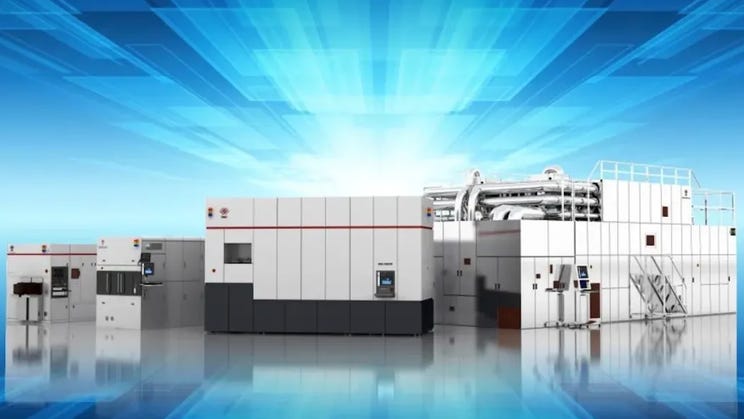
ASML shares fell as much as 6.5%, wiping more than €8 billion off the Dutch lithography giant's market value, after Reuters and The Information reported that Shanghai Aishengna Electronic Technology Group, a little-known Chinese state-owned firm, has begun mass-producing homegrown immersion deep ultraviolet lithography machines, the tools used to print circuitry onto advanced chips. Aishengna plans to build just five machines this year and roughly 20 in 2027, tiny next to the 131 systems ASML shipped in 2025, and analysts note the near-term commercial impact should be limited. But the symbolism cuts deeper than the volume: immersion DUV is the most advanced chipmaking tool China is still allowed to buy under existing US and Dutch export controls, and a working domestic alternative would be exactly the outcome those controls were designed to prevent. China's share of ASML's system sales has already slid from 19% to 14% in a single quarter, and Congress is now debating legislation that could cut off ASML's remaining DUV exports entirely, a move Leiden Asia Center researcher Sanne van der Lugt argues would only accelerate the domestic buildout already underway.
5. Friend Relaunches Its AI Pendant With a Talking Speaker, at Double the Price
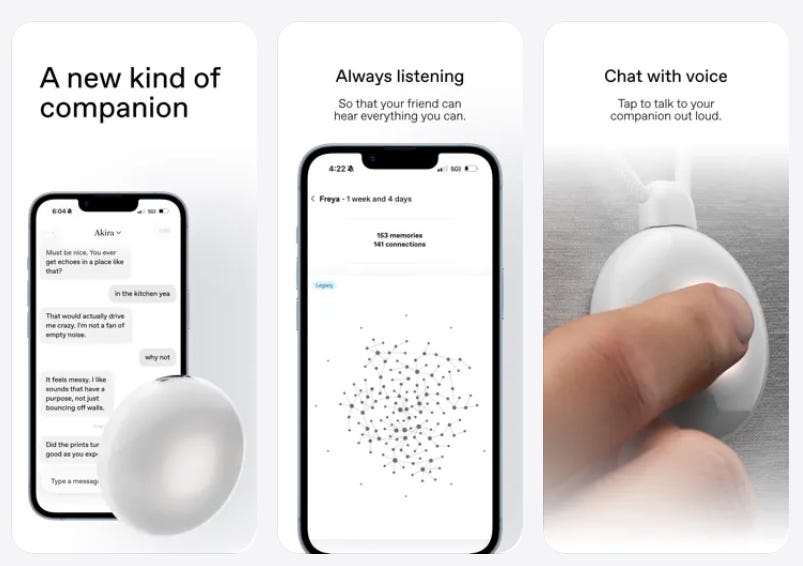
Friend, the always-listening AI companion pendant that New York City subway riders defaced with graffiti reading "AI is not your friend" less than a year ago, has relaunched as "Friend 2.0," now with a built-in speaker so it can talk back rather than only send text notifications, at $249, nearly double the original $129 price. Each pendant is assigned a random voice and personality at setup that users cannot change, and an optional $10 monthly subscription extends the device's memory of past conversations beyond the default 30-day window. Founder Avi Schiffmann had previously sold only around 3,000 units and shipped roughly 1,000 of them, generating about $348,000 in revenue against a marketing budget that dwarfed it, and the relaunch is a bet that a voice, not a lower price, is what finally makes the product stick. The core objection to the product hasn't changed, only its volume: critics including Signal's Meredith Whittaker continue to argue that AI companionship devices aren't friendship at all, just a subscription worn around the neck.
The top 5 stories will always be free.
Here’s what paid subscribers get.
This week’s paid section has something for everyone at the table.
Developers building the next generation: Microsoft is merging every Copilot into one super app, Cursor just slashed its India pricing on the back of its own in-house models, and Google says AI helped it fix more Chrome bugs in a month than in the previous two years combined, plus 4 more stories in the Software and Developer Tools section.
Investors and founders spotting opportunities: Nscale just paid $1.65B to own the software layer of its AI compute stack, synthetic-user startup Simile raised $200M five months after its Series A, and K2 Space raised $500M to bet on giant satellites instead of small ones, plus 7 more stories in the Venture Capital and Startups section.
Legal and policy teams navigating regulation: A German court just ruled AI music maker Suno broke copyright law in a first for Europe, New York is suing Kalshi for $36bn over allegedly illegal gambling, and a judge denied xAI’s bid to block Minnesota’s nudify-app ban, plus 25 more stories across the Legal and Policy sections.
Defense and national security professionals: CoreWeave is taking its AI cloud into classified intelligence work with Leidos, Antares raised $470M to build nuclear microreactors for the US military, and Taiwan detained an Nvidia employee in its widening chip-smuggling probe, plus more on the foreign robot ban in this week’s free section.
Hardware and robotics teams: Google DeepMind’s Gemini Robotics 2 just gave AI whole-body control of a humanoid, Amazon’s Zoox won first US approval to charge for rides with no steering wheel, and Apple is betting on privacy to differentiate its long-awaited smart glasses, plus 19 more stories across the Robotics and Hardware sections.
Healthcare and biotech professionals: Relation raised $110M to build the data behind a foundation model of human cells, the FDA named Dexcom the first company allowed to sell an unauthorized device to Medicare patients, and CareCloud is notifying hundreds of thousands after a data breach, plus 2 more stories in the Healthcare and Biotech section.
Energy and climate leaders: Commonwealth Fusion Systems raised another $1B and hired the banker who took Moderna public, Antares raised $470M for military nuclear microreactors on a presidential deadline, and Google is now guaranteeing $44B in data center rent it will never own, plus 9 more stories in the Energy and Climate section.
Venture capitalists and public market analysts: Nvidia announced $750B in AI deals only to see its own credit market flinch, Apple hit a $5 trillion valuation by spending the least on AI of any big tech peer, and China’s CXMT debuted in Shanghai at a $484B valuation, plus 6 more stories in the Public Markets and Finance section.
Subscribe to unlock the full issue every week, organized for how you actually work.


