
26.26 Weekly TrendDown
June 22 - 28, 2026

For the people building our future, and the people who want to help shape it.
Each week, we separate breakthroughs from daily headlines, helping you understand the technologies, trends, and decisions that will define the next decade.
This Week’s Top Stories
Three concurrent waves are reshaping technology and geopolitics: (1) AI and cyber are converging, with governments treating frontier AI as critical infrastructure subject to national security review; (2) an infrastructure race in quantum, semiconductors, and power is underway, with government equity stakes replacing traditional grants; and (3) consumer hardware is bifurcating into premium, brand-led tiers and accessible, utilitarian options, while the memory shortage cascades across all price segments. The macro pattern: scarcity, whether in compute, electricity, memory, or frontier model access, is becoming the organizing constraint of technological competition, and whoever controls the bottleneck controls the next cycle.
1. Five Eyes Alliance Warns Frontier AI Cyber Threats Are Months Away
The US, UK, Canada, Australia, and New Zealand issued a joint warning: frontier AI capable of supercharging offensive cyberattacks is months, not years, from public release. The alliance flagged that AI will industrialize vulnerability exploitation, compressing weaponization from weeks to hours. The statement emphasized that legacy systems, slow patching, and weak identity controls are the key attack surfaces, but it noted no regulatory mechanism is being attached, advice remains cybersecurity fundamentals. The Five Eyes assessment signals the highest-level concern about AI-enabled cyber operations reaching production-grade capability.
The warning arrives as frontier AI models approach dual-use inflection points: capabilities for both offense and defense are converging, and the asymmetry between attack preparation and defense readiness is widening. Organizations without modern identity and patch management are already exposed. AI will simply compress the time available to respond once weaponization begins.
2. Trump Signs Quantum Computing Executive Orders, $2B in Grants With Government Equity Stakes

Two executive orders signed June 22 set ambitious quantum targets: a research-grade quantum computer "powerful enough for scientific research" by 2028, and commercially relevant systems by end of term. The federal government is allocating $2 billion in grants across nine companies, IBM receiving roughly $1 billion, GlobalFoundries $375 million, with D-Wave, Rigetti, and Infleqtion splitting $100 million each, with a critical difference: the government is taking equity stakes rather than writing grants alone. The second order accelerates post-quantum cryptography migration to a 2031 deadline, but the DoE has not yet defined what "powerful enough" means, leaving threshold metrics undefined.
3. IBM Announces First Sub-1nm Chip Using 3D Nanostack Architecture, Extends Moore’s Law Another Decade
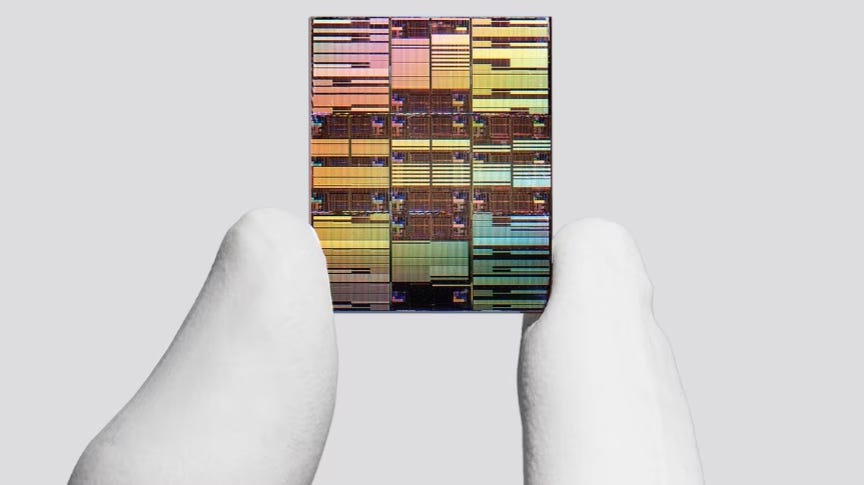
IBM unveiled the first sub-1nm chip using a 3D nanostack architecture, packing nearly 100 billion transistors onto a fingernail-sized die, roughly 2x the density of 2021's 2nm generation. The breakthrough extends Moore's Law another decade by stacking transistors vertically rather than shrinking planar gates further. The chip delivers up to 50% more performance or 70% better energy efficiency versus 2nm predecessors, with 40% SRAM scaling demonstrated at VLSI 2026. The milestone is research-only; production is roughly five years away at IBM's Albany complex, but it signals that node scaling remains viable through three-dimensional approaches.
4. Meta Launches Own-Brand Smart Glasses at $299, Undercuts Ray-Ban Meta While Adding Kylie Jenner Variant

Meta launched their own-brand smart glasses at $299, the Adventurer and Fury models undercutting the Ray-Ban Meta at $359, while adding a Kylie Jenner-designed Starfire variant at $399 to capture fashion-conscious buyers. All models share identical hardware: 12MP camera, 3K video, 5-mic array, 8+ hour battery, and 40 hours with case. The glasses run Muse Spark on-device AI, offering voice commands, visual ID, and translation in 20 languages. EssilorLuxottica remains the manufacturing partner; although Meta is now controlling pricing and distribution directly. The company and EssilorLuxottica hold roughly 82% of the global smart glasses market, having sold 7 million AI-enabled glasses in 2025, up from roughly 2 million in 2023-24. Reality Labs lost $4 billion in Q1 2026 alone, making direct-to-consumer revenue critical.
5. OpenAI Unveils First Custom AI Chip Designed for Inference With Broadcom, Targeting 10GW Compute by 2029

OpenAI unveiled Jalapeño, its first AI chip designed for inference with Broadcom, targeting 10 gigawatts of compute by 2029 as it moves to diversify away from Nvidia dependence. The design was completed in just nine months, with OpenAI using its own models to accelerate chip design, making inference the first frontier where competitors can economically challenge Nvidia's dominance. The Verge reports the Jalapeño chip represents a way out from Nvidia, and the custom silicon approach is becoming table stakes for AI companies looking to control their compute fate. The nine-month development cycle demonstrates that custom chip design is no longer the exclusive domain of hyperscalers with massive internal resources.
The top 5 stories will always be free.
Here’s what paid subscribers get.
This week’s paid section has something for everyone at the table.
Developers building the next generation: Custom chip design becoming mandatory, Mistral OCR, Figma Config updates, and Amazon Q’s MCP vulnerabilities show the tools landscape accelerating, infrastructure-level decisions happening now will lock you into platforms for years.
Investors and founders spotting opportunities: Memory makers (Micron) briefly surpassed Meta and Tesla in value; SK Hynix overtook Samsung; custom chip design (Qualcomm-ByteDance) becoming table stakes. The next billion-dollar company is probably solving a bottleneck you haven’t heard of yet.
Legal and policy teams navigating regulation: California is taxing software for the first time; the EU is putting AWS and Azure under DMA rules; YouTube settled another addiction trial; the US is pressing Meta for AI review while Legion LegalTech sues over Mythos shutdown. Regulatory surface area is expanding faster than most companies can respond.
Defense and national security professionals: Five Eyes’ AI warning, a $3.5B spectrum auction to rip out Huawei, Alibaba suing the Pentagon, China claiming the supercomputer crown. Geopolitical competition is reshaping supply chains in real time.
Hardware and robotics teams: JD.com robots replacing 700k couriers; Agility Robotics SPAC deal; delivery robots pulled from college campuses. Labor automation is moving from aspirational to operational, and hitting constraints no one planned for.
Subscribe to unlock the full issue every week, organized for how you actually work.


