
24.26 Weekly TrendDown
June 8 - 14, 2026

This Week’s Top Stories
1. SpaceX Raises $75 Billion in the Largest IPO in History, Making Elon Musk the World’s First Trillionaire

SpaceX priced 555.6 million shares at $135 each on June 11, raising $75 billion in the largest IPO ever recorded, more than twice the $26 billion Saudi Aramco raised in 2019. Demand was staggering: the offering was nearly four times oversubscribed, with BlackRock alone placing a $5 billion order as total demand reportedly hit $250 billion. Shares debuted at $150 on Nasdaq on June 12 and surged as much as 30% intraday before closing up 19% at $160.95, pushing SpaceX’s market cap past $2.1 trillion. The first-day pop made Elon Musk the world’s first trillionaire, with his combined SpaceX and Tesla stakes pushing his net worth above $1.1 trillion. SpaceX carries $41.3 billion in accumulated losses since its 2002 founding, with last year’s total loss reaching $4.9 billion and Starlink is currently the only profitable segment. Still investors clearly see the future earnings potential and are willing to go to the moon with Space X.
Nasdaq fast-tracked index inclusion, which means passive funds will be required to buy shares the company once it’s officially listed in the index. Although the company will not enter the S&P 500 until mid-2027 due to seasoning requirements. The windfall was enormous for early backers: Founders Fund’s $600 million stake is now estimated at over $50 billion, Sequoia’s holding is worth over $20 billion, and Andreessen Horowitz’s is over $10 billion. Approximately 4,400 current and former employees will become millionaires, with around 400 crossing the centimillionaire threshold. Robinhood reported record-breaking traffic on debut day, and merger speculation between SpaceX and Tesla is now reportedly serious in the wake of the listing.
The IPO also kicked off what analysts are calling a once-in-a-generation cluster of AI-era public listings. OpenAI filed its own confidential S-1 with the SEC on June 8, days after Anthropic did the same, setting up three potential top-five IPOs in history from a single cohort of AI-adjacent companies. OpenAI, last valued at $852 billion, posted a blog saying simply: “We expect it to leak so we’re just announcing it.” The company has not set a listing date but is working with Goldman Sachs, Morgan Stanley, and JPMorgan, with September 2026 cited as the earliest plausible window. Perplexity, by contrast, is sticking to its 2028 IPO plan. SoftBank’s market cap also surpassed Toyota’s for the first time since the dot-com peak, prompting direct comparisons to 2000.
2. Anthropic Launches Fable 5 and Mythos 5, Then the US Government Forces Them Offline
Anthropic released Claude Fable 5 on June 9 as its first publicly available Mythos-class model, immediately topping benchmarks against GPT-5.5 across every major category. Three days later, the US Commerce Department sent Anthropic CEO Dario Amodei a letter invoking national security export controls to bar all foreign nationals, including Anthropic's own foreign-born employees, from accessing Fable 5 and its underlying Mythos 5 model. Anthropic, unable to selectively filter its user base in real time, disabled both models globally for all customers. The directive was the first time the US government used export controls to halt access to a widely deployed commercial AI model. Behind the trigger: Amazon CEO Andy Jassy alerted the White House after Amazon researchers demonstrated that Fable 5 could provide cyberattack-relevant information through a series of prompts. Anthropic received a call giving it 90 minutes to take both models offline. The company disputed the framing, arguing the jailbreak technique was no different from what defenders routinely use AI for, and that it posed no more risk than models already on the market. Reports also surfaced that China may have accessed Mythos prior to the shutdown, a claim that reportedly accelerated the government's timeline. The shutdown hit enterprise customers including banks and government agencies that had been using Mythos for complex reasoning and vulnerability discovery. Anthropic's guardrails also drew criticism from the security community: researchers complained that invisible distillation guardrails prevented the model from answering basic security questions, and Anthropic later apologized for the opacity of those restrictions. Canadian Prime Minister Carney compared the episode to the 2008 financial crisis and warned of systemic "model risk" at the G7 summit. The IMF chief warned that advanced AI like Mythos could be used to destroy the financial system.
3. China Approves the World’s First Commercial Brain Implant, Beating Neuralink to Market
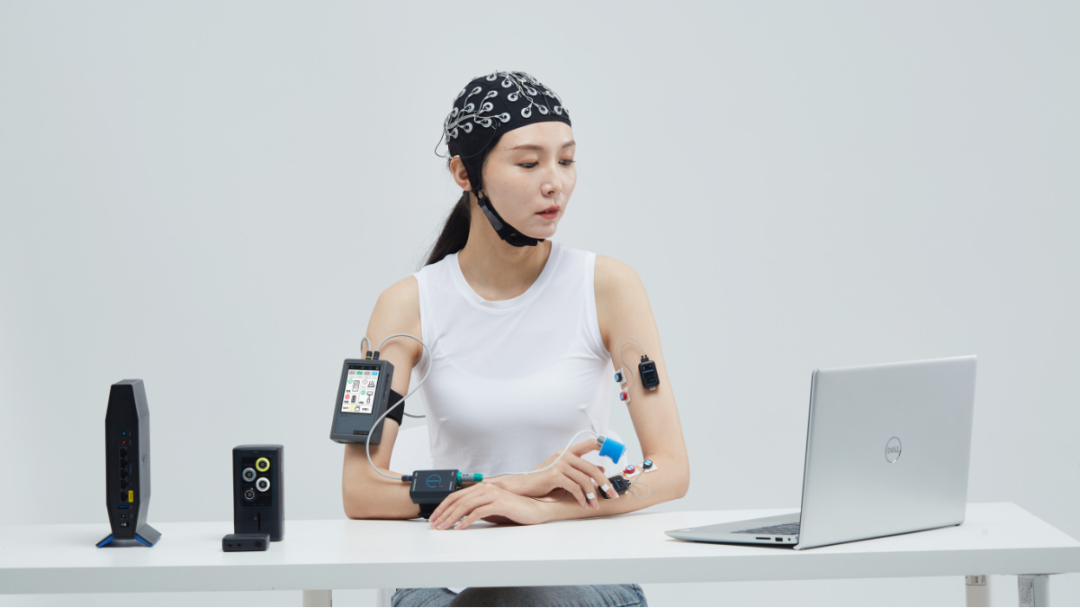
China's National Medical Products Administration granted full commercial approval in March 2026 to NEO, a brain-computer interface developed by Shanghai-based Neuracle Technology and Tsinghua University researchers, making it the first invasive BCI to receive a product license anywhere in the world for use beyond clinical trials. NEO is coin-sized, takes about 90 minutes to implant, and positions its eight sensors on the outer membrane of the brain rather than piercing cortical tissue, a design choice that reduced scarring risk and smoothed regulatory approval. Signals are relayed to an external processor that converts neural activity into commands for a robotic glove. In one widely cited case, a 39-year-old quadriplegic patient regained the ability to write with a pen 11 months after receiving the implant. China designated BCI technology a national strategic priority alongside quantum computing and used an expedited approval corridor that compressed years of FDA-style review into months. Neuralink, by comparison, has implanted its N1 chip in 21 patients under experimental trial conditions and remains years away from US commercial approval, as does every other comparable device in the US or Europe. The tradeoff is signal resolution: Neuralink's intracortical electrodes capture finer neural detail than NEO's epidural sensors, but NEO's signals are sufficient to restore meaningful motor function.
4. Spanish Soccer Club Places Multimillion-Dollar Kalshi Bet Against Its Own Relegation as Financial Hedge
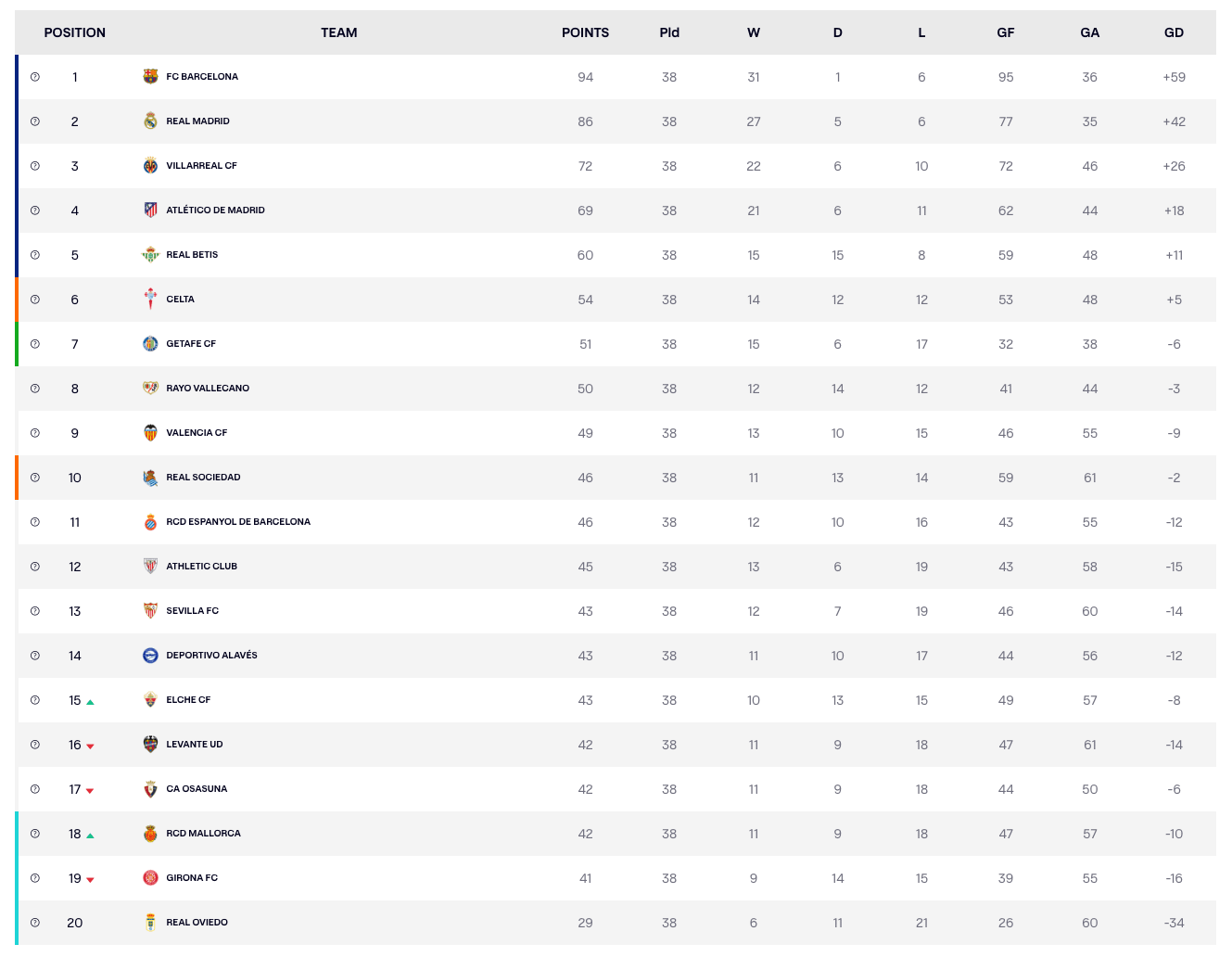
A top Spanish soccer club facing potential relegation from La Liga, later identified as Osasuna through subsequent reporting, placed a multimillion-dollar bet against itself on prediction market Kalshi as insurance against the financial ruin that relegation brings. La Liga's broadcast revenue pool exceeds $1.4 billion annually, with top clubs collecting over $150 million each, making demotion to a lower division catastrophic. The bet was structured through Game Point Capital, a firm that helps sports teams hedge against performance-related financial losses, which typically works with insurers like Lloyd's of London but increasingly tests prediction markets. Susquehanna served as the counterparty and reportedly collected more than $1 million when the club survived on the final matchday with a 1-0 loss that was narrow enough to avoid relegation. The club subsequently denied placing any Kalshi bet directly, saying it only purchased a traditional insurance policy. The episode illustrates how prediction markets are maturing beyond retail speculation into instruments that Wall Street-adjacent firms are treating as serious financial infrastructure. Spain has since temporarily banned Kalshi and Polymarket for operating without a gambling license.
5. Humanoid Robot Pemba Summits 20,000-Foot Volcano Chimborazo, Sets Altitude Record for Bipedal Robots on Its Way to Everest

A modified Unitree G1 humanoid robot named Pemba reached the 6,263-meter summit of Ecuador's Chimborazo volcano in a 16-hour expedition, setting what is believed to be an altitude record for a climbing robot. The project, organized by engineer Pablo Berlanga Boemare and his nonprofit Geologic Dome, is part of a "Triple Crown" initiative targeting the three highest mountains by three different definitions: Chimborazo (farthest point from Earth's center), Mauna Kea in Hawaii (tallest from underwater base), and Everest (highest above sea level). Pemba walked autonomously on slopes under 30 degrees, but team members had to carry it through steeper sections. Engineers built custom thermal management systems to handle temperatures below -40 degrees Celsius and protect batteries at altitude. The Everest attempt, tentatively planned for October 2026, is currently on hold because Nepal has no legal framework for robotic expeditions and authorities are working to establish regulations for non-human climbers. The project's long-term goal is deploying humanoid robots for environmental monitoring, glacier surveying, and search and rescue in remote terrain.
The top 5 stories will always be free.
Here’s what paid subscribers get.
This issue is packed. If you work in tech, invest in it, or advise clients on it, here is what you need to know from the past week.
Builders and developers need to read the deep dive on Apple’s Siri AI overhaul, powered by Google Gemini and running on Nvidia GPUs, plus the new iOS 27 Shortcuts workflows, App Store bundle subscriptions, and what Lovable’s $500M ARR tells you about the vibe-coding economy. The Coinbase MCP tool for AI agent trading is live. NotebookLM gained a cloud computer and Gemini 3.5.
Investors and operators will want the full picture on Bezos’s Prometheus raising $12B at $41B to build an artificial general engineer, the NEURA Robotics $1.4B round backed by Nvidia, Amazon, and Tether, Databricks reportedly raising at up to $175B, Mistral in talks at €20B, and the wave of AI IPO filings from OpenAI, Bending Spoons, and others. Waymo launched a $29.99/month loyalty tier. CoreWeave joined the Nasdaq-100. Klarna launched 3.28% US savings accounts. Standard Bots hit a $1B valuation.
Legal and policy teams should track the 42-state AG investigation into OpenAI days after its IPO filing, the White House deal trading AI preemption for federal online safety laws, the Massachusetts precision location data ban, the Netherlands expanding investment screening to AI and biotech, and the judge who canceled an entire trial after finding both sides used AI to prepare filings.
Defense and government teams need the Pentagon’s expansion of its Chinese military company list to include Alibaba, Baidu, BYD, and Unitree, Alta Ares raising €50M for AI drone interceptors, the FBI’s replica town for cyberattack training, and Boeing upgrading Ghost Bat to compete with Helsing in Germany.
Security teams have a full plate: ShinyHunters breached 100-plus companies through an unpatched Oracle PeopleSoft zero-day, a Qilin ransomware affiliate exploited a Check Point VPN zero-day for a month before a patch existed, a Chinese botnet of 1,500 hacked routers is mapping targets within hours of disclosure, and North Koreans are behind nearly half of US tech industry hacks per CrowdStrike.
Subscribe to unlock the full issue every week, organized for how you actually work.


