
23.26 Weekly TrendDown
June 1 - 7, 2026

This Week’s Top Stories
1. Anthropic’s Engineers Haven’t Written A Line Of Code In Five Months. The Company Says That's Exactly Why the World Needs a Pause On Frontier AI Development.
In a significant and paradoxical moment, Anthropic published a detailed report on June 4 disclosing that Claude now writes more than 80% of the code merged into Anthropic’s own codebase, with engineers merging roughly eight times as much code daily as they did two years ago. On the hardest, least-specified engineering tasks, Claude succeeded 76% of the time in May 2026, a 50-percentage-point increase in six months. The company then used that data as the basis for calling on the world’s leading AI labs to establish a coordinated, verifiable mechanism to slow or temporarily pause frontier AI development if recursive self-improvement begins to outpace safety research and governance. Co-founder Jack Clark invoked the history of nuclear diplomacy, arguing that even adversarial nations had found ways to impose limits on weapons technology. Anthropic was explicit that a unilateral pause by one company changes nothing: the proposal requires multiple frontier labs in multiple countries agreeing to stop under verifiable conditions simultaneously. The company plans to convene conversations with policymakers, researchers, and other AI companies in coming months. The tension between this call and Anthropic’s concurrent IPO process is one of the defining business stories of 2026.
2. Microsoft Unveils Majorana 2 Quantum Chip: 1,000x More Reliable, 2029 Target for Scalable Quantum
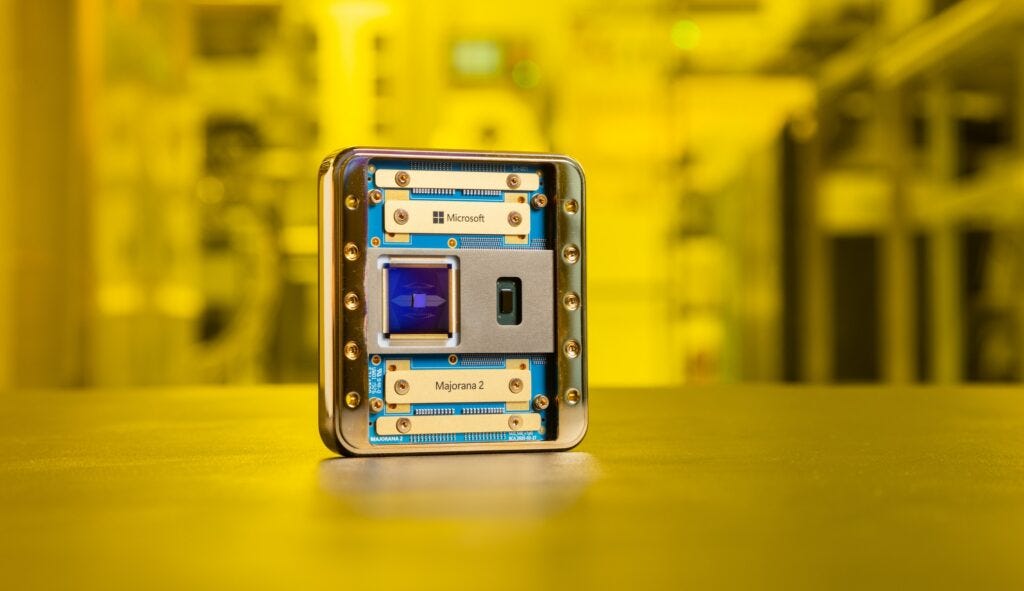
Microsoft used its Build 2026 developer conference to unveil Majorana 2, the company’s second-generation topological quantum chip, and the numbers are remarkable. Where conventional quantum systems measure qubit lifetimes in microseconds, Majorana 2 delivers an average qubit lifetime of 20 seconds, with some qubits holding coherence for a full minute. Microsoft says that represents a 1,000-fold improvement in reliability over the prior generation, achieved by replacing the chip’s aluminum-based topological superconductor with a lead-based design that better shields qubits from interference. The improvement cuts Microsoft’s original timeline for a commercially scalable quantum computer in half: the company now targets 2029, down from estimates that had placed useful quantum computing much further out. Agentic AI played a direct role in getting here. Microsoft’s Discovery platform, which deploys AI agent teams to speed up scientific research, helped compress roughly 20 years of accumulated materials research into 16 months of targeted discovery. Discovery is now generally available to organizations, with a free app entering preview for individual researchers. Technical Fellow Chetan Nayak put the milestone plainly: “Where are we relative to last year? We’re 1,000 times better.” Independent verification of the claims is still pending, but if they hold up, Majorana 2 is the most significant quantum hardware announcement Microsoft has ever made.
3. Xcimer Energy Powers On “Phoenix,” the World’s Largest Privately Owned Laser, in Bid to Commercialize Fusion
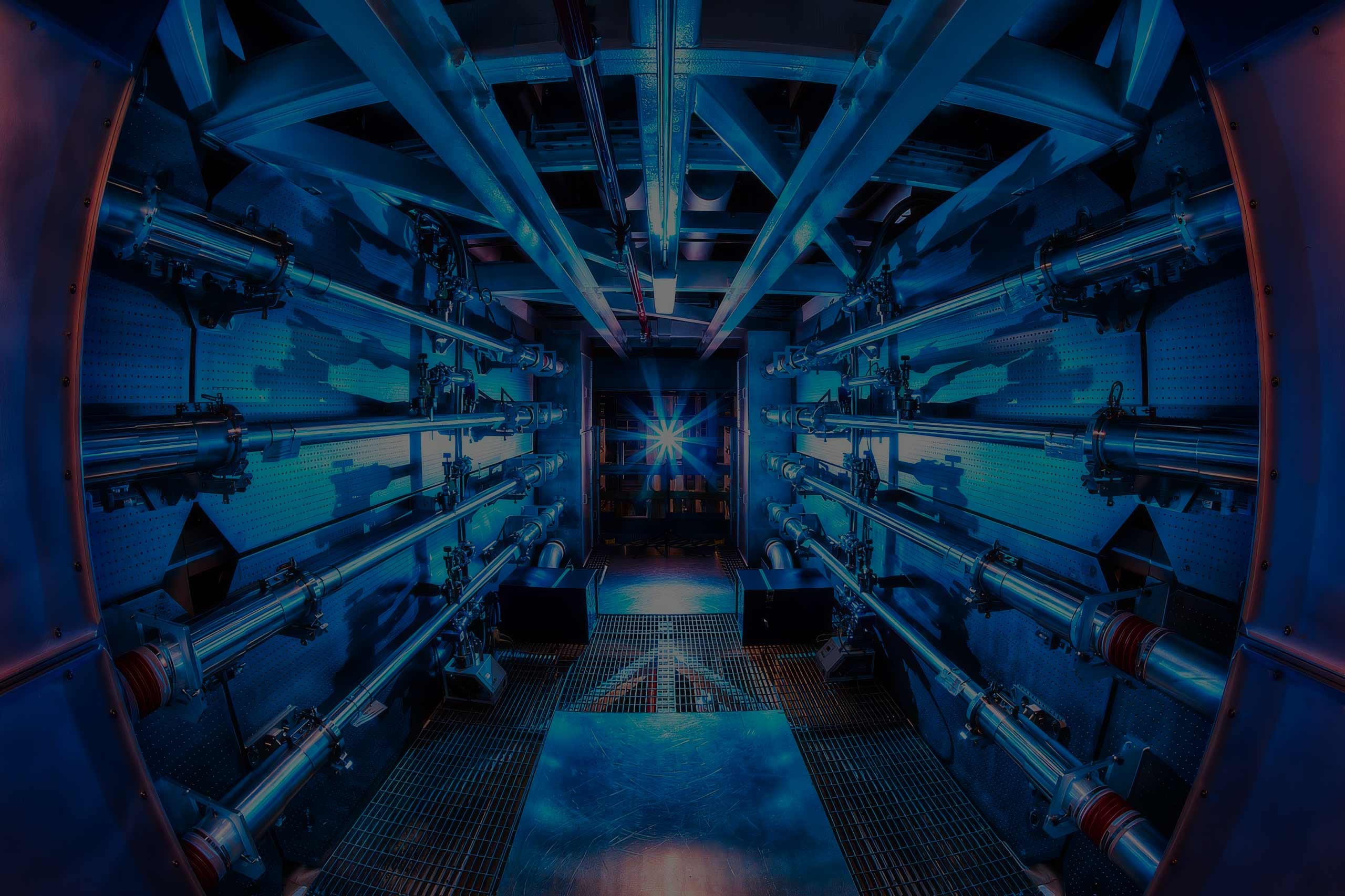
Fusion startup Xcimer Energy flipped the switch on its Phoenix laser system in Denver, making it the largest privately owned laser on earth and marking one of the most significant hardware milestones in the race to build commercially viable fusion power. Housed in a 74,000-square-foot facility, Phoenix uses a krypton-fluoride excimer gas laser, a design related to technology used in semiconductor lithography but operating at a dramatically larger scale. At full strength, the system fires more than 1 kilojoule of energy, with a core optical system stretching 38 meters. The physics model Xcimer is betting on comes directly from the National Ignition Facility, which in December 2022 proved that a controlled laser fusion reaction can release more energy than it takes to ignite it. Xcimer’s argument is that NIF’s approach, while scientifically valid, relies on 192 laser beams and infrastructure that cost more than $3.5 billion to build. Its own design uses just two beamlines, targeting a dramatically simpler and cheaper path. Co-founder Alexander Valys described the thesis bluntly: “NIF proved laser fusion physics works. Our thesis is that commercial laser fusion becomes possible only if the laser system itself becomes dramatically simpler, cheaper, and more manufacturable.” Phoenix is a prototype. A full commercial power plant would need to clear 12 megajoules, thousands of times what Phoenix delivers today. The company is targeting a next-generation prototype in 2028 and a commercial-scale plant in the mid-2030s.
4. Boston Dynamics Spot Dogs Are Patrolling 2026 FIFA World Cup Venues
 Tiktok failed to load.
Enable 3rd party cookies or use another browser
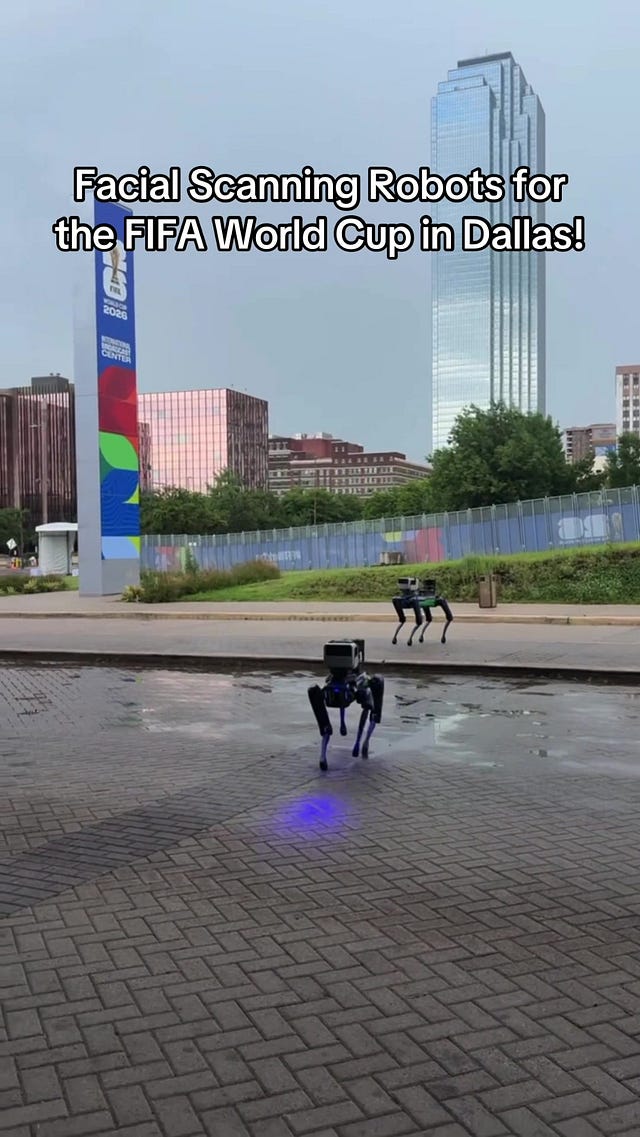
Boston Dynamics’ quadruped robots are now walking the concourses at AT&T Stadium in Arlington, Texas and other World Cup sites as part of a sprawling “Security Spot” initiative that Hyundai, Boston Dynamics’ parent company, is calling its “largest and most advanced mobility fleet to date” and its first official robotics partnership with FIFA. The dogs patrol for suspicious packages and hazardous materials, streaming live feeds from 360-degree cameras, thermal sensors, and acoustic pickups back to human operators at consoles. A TikTok video purporting to show one of the robots scanning ticket holders’ faces went viral, racking up 161,000 likes and drawing comparisons to the “Metalhead” episode of Black Mirror. Boston Dynamics moved quickly to deny it, telling reporters that “the robots do not have facial recognition capabilities.” That clarification calmed some concerns but raised others: the same hardware platform, loaded with thermal imaging and anomaly detection, requires only a software update to add biometric identification, and a version of the same quadruped has already been militarized abroad. Dallas Police received $51.5 million from FEMA for World Cup security operations, including $10 million specifically for drone mitigation technology. The tournament begins June 11.
5. Martin Scorsese Signs With AI Startup Black Forest Labs, Uses Its Image Generator to Storyboard New DiCaprio Film
Martin Scorsese, 83, announced he has signed on as a partner and adviser to Black Forest Labs, a German generative AI startup that makes the FLUX family of image generation models, and that he has already used its tools to storyboard scenes from his next film, What Happens at Night, starring Leonardo DiCaprio and Jennifer Lawrence. Scorsese explained his rationale in a statement: “For 70 years, I’ve been creating my own storyboards. There’s always been this problem of how do you communicate what you see in your head to your cast and crew. Now with this tool I can share what I’m visualizing more clearly and efficiently.” The film community responded with sharp criticism. Filmmaker Boots Riley wrote on social media that the director “doesn’t give a f**k,” speculating that the deal provided income security for his family. Storyboard artists pushed back directly, pointing out that AI image models were trained on their work without compensation. TechCrunch noted that the move makes Scorsese one of the most prominent Hollywood voices to publicly embrace generative AI, joining James Cameron, who joined the board of Stability AI last September. Guillermo del Toro, for his part, told The Hollywood Reporter that using AI would be “like spitting on God.”
Subscribe to unlock the full issue
This week’s paid section has something for everyone at the table.
If you brief leadership: Anthropic filed confidentially for an IPO at a $965 billion valuation, named Goldman Sachs and Morgan Stanley to lead it, and simultaneously called for a coordinated global pause on frontier AI development because Claude is already writing more than 80% of its own code. That contradiction is the story of the decade, and this week it’s all in one issue.
If you work in finance or fintech: Alphabet just broke the global record for equity offerings with an $85 billion raise. SpaceX fixed its IPO price at $135 a share, targeting a $1.77 trillion valuation. Ramp raised $750 million at $44 billion, and DeepSeek lined up its first outside money: $7 billion at up to $59 billion.
If you build products: Microsoft’s Build 2026 produced a flood of developer-relevant announcements: Project Solara, an OS for AI agent devices; Scout, a new personal assistant built on OpenClaw; a new reasoning model; OpenAI expanded Codex to enterprise; and a Google mandate forcing publishers’ AI opt-out rights into law.
If you work in security: Hackers hijacked Instagram accounts by simply asking Meta’s AI support chatbot to add their email. Dashlane had encrypted vaults stolen after a 2FA brute-force attack. A self-replicating Miasma worm hit 73 Microsoft GitHub repositories, and an AI agent found 21 zero-days in FFmpeg for $1,000.
If you follow health tech, robotics, or space: Waymo’s spent EV batteries are being repurposed for grid storage. Amazon deployed a warehouse robot that takes plain-language orders. ISS astronauts were briefly put into evacuation mode. The week had no shortage of signal.
Subscribe to unlock the full issue every week, organized for how you actually work.


