
12.26 Weekly TrendDown
March 16-22, 2026

This Week’s Top Stories
1. Disney’s Olaf Robot Stole the Show at Nvidia GTC Ahead Of His Debut at Disneyland Paris on March 29th
Walt Disney Imagineering’s free-roaming, fully autonomous Olaf robot made its public debut at Nvidia’s GTC keynote this week, joining CEO Jensen Huang onstage in what was one of the most striking live demos at the conference. According to Disney Experiences, the snowman from Frozen is a self-walking, AI-powered character built to wander through theme parks and interact with guests without rails, remote controls, or a visible puppeteer in sight. Forbes confirmed the robot held a genuine real-time conversation with Huang onstage, demonstrating natural language interaction, expressive movement, and the kind of uncanny warmth that makes it feel less like a machine and more like an animated character somehow escaped from a screen.
The Verge’s hands-on report noted that up close, Olaf is noticeably smoother and more emotionally readable than prior generations of Disney animatronics — the result of Disney Imagineering R&D combining physical AI with expressive robotics over several years. The character is scheduled to make his official park debut at Disneyland Paris on March 29th inside World of Frozen, and the technology underpinning him is widely expected to form the foundation of a new generation of characters across Disney’s global parks. This is not a gimmick. If Disney can scale and maintain this reliably in a live guest environment, it changes what a theme park character can be.
2. Scientists Revive Brain Activity in Frozen Mouse Tissue for the First Time, Raising Hopes for Cryopreservation

Researchers at the University of Erlangen-Nuremberg in Germany have done something previously considered impossible: they froze slices of adult mouse hippocampus tissue at -196°C and successfully revived measurable neural and synaptic activity after thawing, a result published in the Proceedings of the National Academy of Sciences. The method is called vitrification — instead of allowing water to crystallize into cell-shredding ice, chemicals convert the tissue into a glass-like state, preserving the delicate architecture of neurons and synapses intact. After storage of up to seven days at -150°C, the team rewarmed the slices and observed neurons firing again, synapses transmitting signals, and critically, hippocampal long-term potentiation (the biological mechanism underlying memory formation) was still functional. Nature’s coverage of the study noted this is the first time complex brain functions have been restored after such extreme freezing conditions; earlier attempts at rat brain slices in 2006 preserved structure but not electrical function. Lead author Alexander German was careful to note the gap between thin slices and whole organs: better vitrification chemistry and precision rewarming tools will be needed before this scales to anything approaching a mammal, let alone a human. But the implications are already significant in nearer-term medicine: the ability to pause neural tissue during stroke treatment or traumatic brain injury, or to bank donor organs for longer windows, is now closer to plausible than theoretical.
3. CERN’s Large Hadron Collider Discovers Its 80th Particle — a Proton-Like Baryon Four Times Heavier Than Normal

CERN announced this week that its upgraded LHCb detector has identified a new subatomic particle: the Xi-cc-plus, a baryon made of two charm quarks and one down quark. A normal proton has two up quarks and one down quark — swap in two much heavier charm quarks and you get something proton-shaped but four times the mass, with a lifetime six times shorter than its previously discovered cousin, making it exceptionally difficult to catch. Science Alert noted this is the 80th hadron identified by LHC experiments and the first discovery made with the newly upgraded LHCb detector completed in 2023 — a significant milestone for a major international project involving more than 1,000 scientists across 20 countries. The finding settles a 20-year-old question: a 2002 Fermilab experiment hinted at the particle’s existence but the signal lacked the 5-sigma confidence threshold for a formal discovery. The new observation comes in at 7-sigma. Universe Today explained that the Xi-cc-plus gives physicists a new way to test quantum chromodynamics, the theory of the strong nuclear force, including how it governs exotic structures like tetraquarks and pentaquarks. CERN is already planning the Future Circular Collider, which would dwarf the LHC’s capabilities when complete around 2030.
4. Haidilao’s Dancing Robot Trashes a Table, Gets Manhandled by Three Staff Members, Then Goes Back to Work
An entertainment robot at a Haidilao hot pot restaurant in Cupertino, California, went viral this week after an employee accidentally triggered its high-energy dance mode too close to a dining table, sending chopsticks, condiments, and dishes flying while three staff members physically wrestled to restrain it. TechCrunch confirmed the robot appears to be an AgiBot X2, a humanoid model that debuted at CES in January, and that it was deployed purely for entertainment, not food service. Haidilao told NBC News the robot was not malfunctioning: a guest had requested the robot perform closer to their table than its normal operating zone, the limited space restricted its preprogrammed routine, and an employee hit the wrong mode. According to The Daily Beast’s report, damage was limited to spilled sauces, and the robot was back in service the same day, although only doing slower, gentler dances and offering high-fives. The clip prompted predictable commentary about the absence of a large, obvious power switch, which the restaurant’s staff apparently could not locate in time and had to access through a phone app instead.
5. Shenzhou-21 Astronauts Harvests Cherry Tomatoes From China’s Tiangong Space Station
Astronauts aboard China’s Tiangong space station have harvested their first batch of space-grown cherry tomatoes, a small but meaningful milestone in humanity’s ongoing effort to grow food off Earth. As Futurism reported, the Shenzhou-21 crew grew the tomatoes using an aeroponic cultivation system, delivered to the station in July 2025, which mists plant roots with nutrient solution instead of soil and is paired with a full-spectrum LED panel designed for energy efficiency in microgravity. Earlier footage shared by the crew showed compact vines loaded with yellow and red cherry tomatoes inside the growing box. Astronaut Wu Fei described the scent of ripening tomatoes as something she sought out on daily passes through the station; astronaut Zhang Lu called the greenery “incredibly healing.” The experiment collects growth data intended to inform future long-duration missions where resupply is not practical, and China plans to follow the tomato trials with aeroponic cultivation of wheat, carrots, and medicinal plants. NASA has run similar experiments on the ISS for years, including the famous 2023 case of a rogue tomato recovered after going missing for eight months and nearly becoming a diplomatic incident for the astronaut accused of eating it.
The top 5 stories will always be free.
Here’s what paid subscribers get.
If you work in AI or software development, this was a dense week. OpenAI is merging ChatGPT, Codex, and its Atlas browser into a single desktop superapp — driven by Anthropic capturing 73% of first-time enterprise AI spending. Uber’s internal AI agent is writing 1,800 lines of code per week with zero human authoring, and its CTO shared the full operational picture. Meta’s Manus agent launched a local desktop app to take on OpenClaw. Microsoft’s in-house MAI-Image-2 debuted at #3 on the global image leaderboard. Valve’s SteamOS 3.8 is bigger than it looks. And Multiverse Computing opened its compressed AI model API to the developer market.
If you’re an investor or operator, the week was loaded with deal flow: Uber committed up to $1.25 billion to Rivian for 50,000 robotaxis. Nth Cycle signed a $1.1 billion deal with Trafigura to reshore critical minerals refining. Nvidia projected $1 trillion in chip orders through 2027 — and Wall Street barely moved. Arc Boat Company raised $50 million to electrify commercial and defense maritime. Bluesky closed $100 million. Meta signed $27 billion with Nebius. Jeff Bezos is reportedly raising $100 billion to buy and transform old manufacturing firms. And pardoned Nikola founder Trevor Milton is trying to raise $1 billion for autonomous planes.
If you’re in legal or policy, Encyclopedia Britannica and Merriam-Webster sued OpenAI for training on nearly 100,000 of their articles — the case lands as a major copyright MDL approaches fact discovery. Congress introduced the BETS OFF Act to ban prediction market wagers on wars, government actions, and insider-advantage events, while Kalshi faces criminal charges in Arizona and a ban in Nevada. Tesla FSD is under escalating federal investigation. The SEC is weighing a shift to twice-yearly earnings reports.
If you’re in defense or government, the Pentagon formally labeled Anthropic a national security risk over its AI red lines — while a court filing revealed the two sides were nearly aligned just one week before Trump declared the relationship over. Palantir’s Maven AI was granted program-of-record status, locking it in as the military’s core targeting system. Gecko Robotics landed the largest US Navy robotics contract ever. And Alpine Eagle is scaling production of its airborne counter-drone system as European governments race to close their air defence gap.
If you’re in security, Iran-backed hackers mass-wiped thousands of Stryker devices via Microsoft Intune — the FBI seized their websites and the US formally accused Iran’s government of running the group. A cyberattack on a vehicle breathalyzer company left drivers stranded across the US. And the FBI director confirmed the agency buys Americans’ location data without warrants.
Executives and media leaders will want the LinkedIn and Trade Desk CTV deal (B2B advertising is about to get a lot more targetable on streaming TV), ByteDance’s Seedance 2.0 suspension after Hollywood pushed back, Josh D’Amaro’s ascent to Disney CEO, GlobalComix’s $13 million raise and INKR acquisition to build the infrastructure for global manga distribution, and Perplexity Health — the third major AI platform in eight weeks to integrate with Apple Health.
Subscribe to unlock the full issue every week, organized for how you actually work.


*THE PAID SECTION IS FREE
FOR EVERYONE THIS WEEK*
Jump to your Section
🛠 Builders & Developers — OpenAI is merging its desktop products into a superapp, Uber’s AI agent is authoring 1,800 code changes a week, and Meta’s Manus agent launched local desktop control to take on OpenClaw.
💰 Investors & Operators — Uber drops $1.25B on Rivian robotaxis, Nth Cycle signs a $1.1B deal to reshore nickel refining, Nvidia projects $1 trillion in chip orders, and Arc Boat raises $50M for electric commercial and defense vessels.
⚖ Law & Policy — Britannica and Merriam-Webster sue OpenAI, Congress introduces the BETS OFF Act to ban prediction market wagers on wars and government actions, and Tesla FSD faces a potential recall.
🛡 Defense & Government — The Pentagon labels Anthropic a national security risk, Palantir’s Maven AI gets program-of-record status as the military’s core targeting system, and Gecko Robotics lands the largest US Navy robotics deal ever.
🏥 Health & Biotech — Perplexity launches a health data platform integrating Apple Health, wearables, and medical records, Fitbit’s AI coach gains access to your clinical history, and a $495 tDCS headset targets attention and mood.
💻 Hardware & Gadgets — Samsung killed its Galaxy Z TriFold after three months, Amazon is building an Alexa phone, and Valve’s SteamOS 3.8 is quietly becoming a platform well beyond the Steam Deck.
⚡ Energy & Climate — A $35,000 plug-and-play off-grid utility pod ships in September, Nscale signs a 1.35GW LOI with Microsoft for a West Virginia AI campus, and Fervo geothermal crosses the valley of death.
🎬 Media & Entertainment — LinkedIn and The Trade Desk open B2B programmatic CTV advertising, ByteDance pauses Seedance 2.0 after Hollywood pushes back, and GlobalComix raises $13M and acquires an AI localization engine to become the infrastructure layer for global manga distribution.
📱 Platforms & Social — Robinhood is building a social network for retail investors, Google’s Gemini Personal Intelligence expanded to all US users, and DoorDash launched a gig app that pays couriers to film AI training data.
🤖 Robots, Autonomous Vehicles & Drones — Kodiak’s CEO says building a self-driving truck is only half the battle, Alpine Eagle scales airborne counter-drone production, eternal.ag deploys greenhouse harvesting robots trained in virtual environments, and Uber’s $1.25B Rivian robotaxi deal reshapes the autonomous fleet market.
🔐 Security — Iran-backed hackers mass-wiped thousands of Stryker devices, a breathalyzer cyberattack stranded drivers nationwide, and the FBI confirmed it purchases Americans’ location data without warrants.
🔭 Science & Space — The LHC confirmed its 80th particle, Cortical Labs opened biological data centers in Singapore and Melbourne where developers can deploy code to real neurons via the cloud, and Blue Origin filed for 51,600 orbital data center satellites.
🛠 Builders & Developers
Meta’s Manus Agent Launches a Desktop App That Reads, Edits, and Controls Files and Applications Locally — Without a Cloud Upload
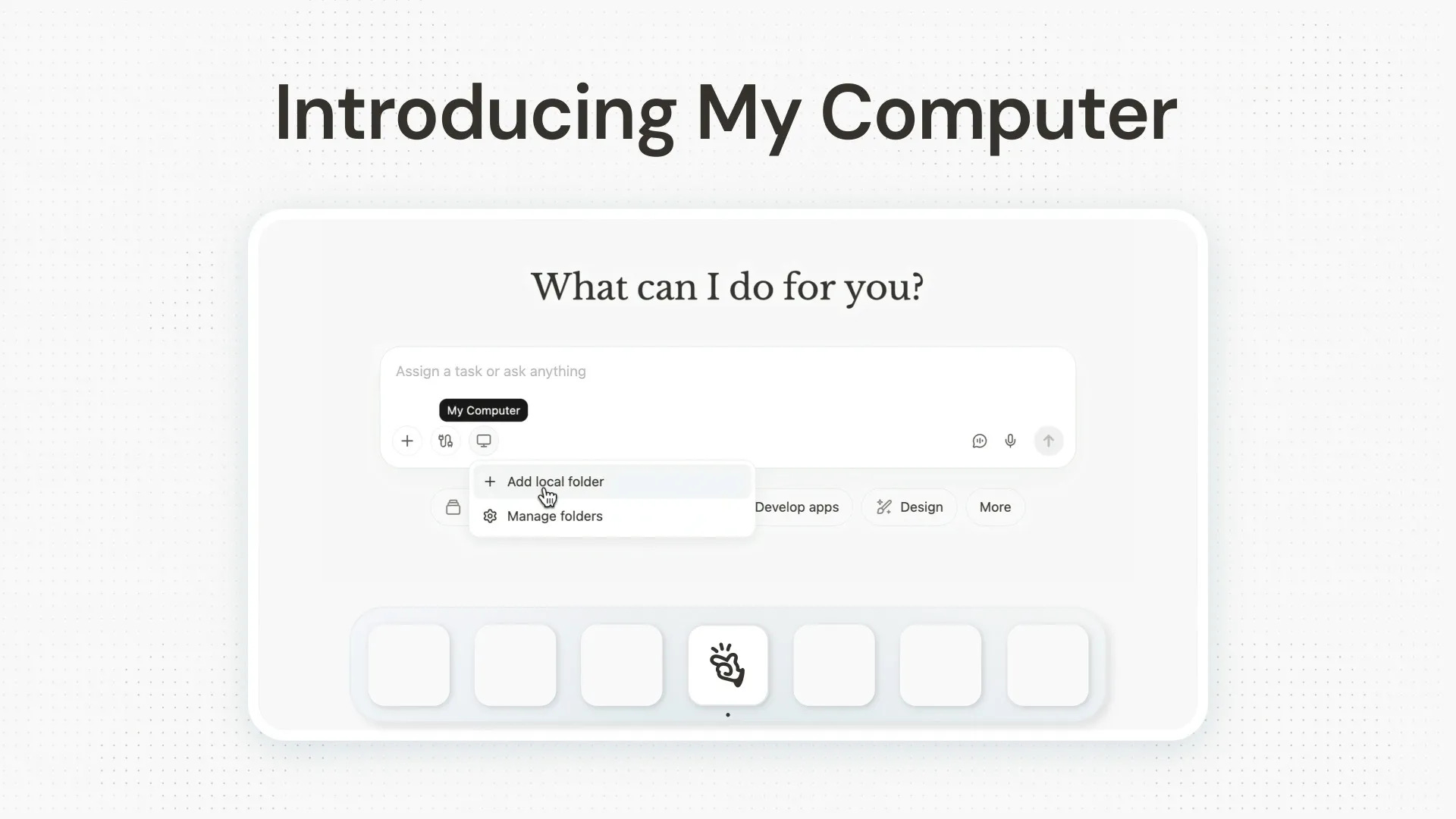
Manus, the AI agent startup Meta acquired late last year, launched My Computer — a desktop application for macOS and Windows that brings the Manus agent directly onto users’ devices, letting it read, edit, and act on local files, launch and control applications, and execute multi-step coding tasks entirely on-machine. The move is a direct response to OpenClaw, the open-source MIT-licensed agent that exploded last month, running locally for free and drawing endorsements from Jensen Huang. Manus’s pitch is the polished commercial alternative: OpenClaw is free and configurable but requires technical setup and produces inconsistent results depending on which underlying model the user connects; Manus runs on Meta’s proprietary model stack and is designed to work reliably out of the box, at the cost of a subscription fee. The architectural gap is real — previous Manus operated as a cloud agent, which meant everything went to a remote server before results came back. My Computer closes that gap while keeping Manus’s more capable model layer underneath. For developers who have found OpenClaw’s configuration friction a barrier, or whose work involves sensitive local files they cannot send to a cloud, it is a meaningful alternative. Whether they will pay for it when OpenClaw is free is the question the next few months will answer.
Google Relaunches Stitch as an AI-Native “Vibe Design” Tool — Describe a Feeling, Get a High-Fidelity UI Back

Google Labs released a major redesign of Stitch, its AI design tool, reframing the product around a concept it’s calling “vibe design” — a deliberate riff on vibe coding, the now-ubiquitous term for generating software with AI from natural language alone. The updated Stitch replaces the traditional wireframe-first workflow with an infinite AI-native canvas where designers describe a business objective, a desired emotional tone, or a visual reference — and Stitch generates multiple high-fidelity UI directions from there. A new Voice Canvas feature lets designers speak directly to the canvas; the AI agent asks clarifying questions, offers real-time critique, and makes live updates as the conversation progresses. A multi-agent system lets several AI agents work simultaneously across the canvas — one handling typography, another colors, another generating context-aware placeholder images through Stitch’s built-in Nano Banana 2 image model. Designs export to HTML/CSS directly or to Figma for refinement, and a new pipeline connects to Google AI Studio and the Antigravity coding agent for full production development. Stitch can also ingest an existing website’s design tokens and save them as a DESIGN.md file that travels with the project and maintains system consistency across sessions. The practical claim: from vague idea to clickable multi-screen prototype in minutes, for free during beta. Figma’s stock dropped roughly 10% on the announcement. The honest limitation: Stitch is a starting point, not a finisher — production teams still need Figma for pixel-perfect component work and design system depth.
Nvidia Turned OpenClaw Into an Enterprise-Grade Platform Called NemoClaw With Security and Access Controls Baked In
Nvidia CEO Jensen Huang used his GTC keynote to announce NemoClaw, an enterprise version of OpenClaw — the open-source local AI agent that exploded in popularity last month — built with the security and policy controls that make OpenClaw essentially unusable in corporate environments today. Where standard OpenClaw gives agents broad, unconstrained access to a local machine, NemoClaw adds centralized control over how agents behave, what data they can access, and how they interact with enterprise systems, all configurable with a single command. The Next Web noted Nvidia is positioning NemoClaw as infrastructure on par with Linux or Kubernetes — Huang’s framing on stage was explicit: “Every company in the world today needs to have an OpenClaw strategy.” NemoClaw is open-source, available at nemoclaw.bot, and Nvidia’s enterprise security and compliance layer sits on top as the value-add for corporate deployments.
Multiverse Computing Launches an API and App for Compressed AI Models That Run Locally Without Cloud Infrastructure
Spanish startup Multiverse Computing has quietly built a business compressing models from OpenAI, Meta, DeepSeek, and Mistral into smaller versions that run on a user’s own hardware — no cloud provider, no data center dependency, no counterparty risk. TechCrunch reported the company is now pushing those models into mainstream developer access with a public API portal and a companion app called Compacti that demonstrates what compressed models can do in practice. The timing is deliberate: with private company defaults running above 9%, Lux Capital recently advised AI-dependent companies to get compute commitments confirmed in writing — a warning that the AI supply chain is not as reliable as it looks. Running capable AI models entirely on local hardware sidesteps that problem. Multiverse’s compression approach is different from standard quantization — it uses tensor network methods derived from quantum computing research to reduce model size more aggressively while preserving more of the original model’s performance. The company has been selling to financial institutions and defense customers for several years; this week’s launch is its first direct move toward the broader developer market.
Microsoft’s In-House MAI-Image-2 Debuts at #3 on the Global AI Image Leaderboard, Behind Only Google and OpenAI
Microsoft’s internal AI research team, the Superintelligence group now led full-time by Mustafa Suleyman after his recent reorganization into that role, released MAI-Image-2 — the company’s second-generation in-house image generation model, debuting at number three on the Arena.ai text-to-image leaderboard behind Google’s Gemini 3.1 Flash and OpenAI’s GPT Image 1.5. A year ago, Microsoft was generating Bing and Copilot images almost entirely using OpenAI models. MAI-Image-2 focuses on three areas: photorealism with accurate skin tones and natural light, readable in-image text including signs and typographic layouts, and dense or surreal scene generation requiring high compositional fidelity. It is rolling out through the MAI Playground, Bing Image Creator, and Copilot simultaneously. MAI-Image-2 is the first model to ship publicly since Suleyman stepped back from his broader Microsoft AI CEO role to focus exclusively on frontier model development.
Uber’s Internal AI Agent Is Writing 1,800 Lines of Code a Week With Zero Human Authoring — 95% of Engineers Now Use AI Monthly
Uber CTO Praveen Neppalli Naga posted a detailed update this week on what agentic AI coding actually looks like at scale inside a major tech company. Uber’s internal background coding agent is now producing 1,800 code changes per week with no human writing a single line — engineers review and approve, but do not author. Ninety-five percent of Uber’s engineers use AI tools every month, 84% are working in agent-style workflows rather than just tab-completion, and 65–72% of code committed inside standard IDEs is AI-generated. Claude Code usage at Uber nearly doubled in three months (32% to 63%), while traditional IDE-based tools have plateaued. To manage the infrastructure behind all of this, Uber built several internal tools: Minion, a background agent platform with monorepo access; Code Inbox, for smart PR routing as AI-generated pull requests pile up; and an MCP Gateway that connects agents to internal context including source code, Slack, Jira, and engineering documentation. The shift is not cost-free — Naga noted AI-related costs are up 6x since 2024 and token cost optimization is now a priority. The framing from Naga was deliberate: the strongest adoption at Uber is not coming from top-down mandates but from engineers quietly experimenting. For developers watching how this plays out at a company with Uber’s engineering scale, that detail matters as much as the numbers.
Nvidia’s DLSS 5 Uses Generative AI to Reconstruct Game Frames and Gamers Are Not Having It
Nvidia revealed DLSS 5 at GTC, a generative AI upscaling system that uses a diffusion-style model to synthesize entire video game frames rather than just scale existing ones. TechCrunch noted Nvidia claims the system boosts photorealism and has ambitions beyond gaming in visualization and simulation. The problem: The Verge described it as feeling like motion smoothing applied to faces, producing an uncanny over-smoothed look gamers immediately compared to reality-TV filters. Nvidia’s subreddit lit up with memes, and CEO Jensen Huang stepped in to tell gamers they were wrong. Futurism captured the community’s term for it: “sloptracing.” Whether this is a real-time aesthetic upgrade or AI hallucinating fake game content will depend on how individual games implement it.
Sony Issued a Major Update to Its PS5 Pro PSSR Upscaler
The Verge reported Sony pushed a significant PSSR upscaling update for PS5 Pro games, with improvements visible in titles including Cyberpunk 2077 and Silent Hill 2. The update improves resolution fidelity in motion-heavy scenes where PSSR previously struggled compared to competitors.
Adobe Firefly Can Now Train Custom Image Generation Models on Your Own Art
Adobe launched public beta access for custom Firefly models — meaning individual creators and studios can now train a Firefly model on their own portfolio, style, or brand assets, and generate new images that stay on-model. The feature is aimed directly at design teams that need AI output that actually matches their visual identity rather than Firefly’s generalist defaults.
Picsart Launches an AI Agent Marketplace Where Creators Can “Hire” Specialized Assistants
Picsart announced an agent marketplace that lets creators select and deploy specialized AI assistants for tasks like background removal, style transfer, copywriting, and content scheduling — positioning the platform as a coordination layer for creative AI tooling rather than just a single editor.
Pokémon GO Players Unknowingly Built a 30-Billion-Image Map That Now Trains Delivery Robots

Popular Science reported that Niantic’s spatial mapping infrastructure — built from over 30 billion AR images captured by Pokémon GO players since 2016 — has been licensed and used to train delivery and navigation robots. Players scanning the environment to catch Pokémon were, without knowing it, building one of the most detailed 3D maps of public spaces ever assembled. The dataset includes pedestrian zones, building facades, and street-level geometry that is exceptionally hard to capture any other way at scale.
Mistral Launches “Forge” to Let Enterprises Build Custom AI Models at Nvidia GTC
Mistral announced “Forge” at GTC, a platform that lets enterprises fine-tune, deploy, and manage custom AI models using Mistral’s base models as a starting point. The positioning is direct: build your own AI rather than rent OpenAI or Anthropic’s. Nvidia is a key partner for compute.
Garry Tan’s Claude Code Setup Drew Both Admiration and Backlash
TechCrunch examined why Y Combinator president Garry Tan’s shared Claude Code workflow became a flashpoint — praised by developers who saw it as a practical agentic coding demonstration, and criticized by others who felt it overhyped what is still an inconsistent tool in production environments. The broader debate: how much of agentic coding is genuinely useful today versus aspirational.
WordPress.com Now Lets AI Agents Write, Publish, and Manage Your Site
WordPress.com enabled MCP-based write access, meaning external AI agents can now draft posts, publish content, and manage site settings autonomously — not just read site data. This is a meaningful step from AI-assisted writing to AI-operated publishing infrastructure.
💰 Investors & Operators
Arc Boat Company Raises $50 Million Series C to Bring Electric Propulsion to Commercial Fleets and Defense Contractors

Los Angeles-based Arc Boat Company closed a $50 million Series C led by Eclipse, with participation from a16z, Menlo Ventures, Lowercarbon Capital, and others, to expand from consumer sport boats into commercial and defense markets. TechCrunch reported the company is following a deliberately Tesla-shaped playbook: start with premium consumer hardware to prove out the technology and unit economics, then use that foundation to move into higher-volume commercial applications where reliability standards are unforgiving. It appears to be working — Arc told TechCrunch that inbound interest from commercial and defense buyers came in so fast it accelerated the expansion timeline. On the commercial side, Arc will design and co-build boats with shipyard partners rather than manufacturing whole vessels itself — the same model it used for a hybrid tugboat order worth $160 million signed last year with Curtin Maritime. On the defense side, the company is eyeing electric propulsion system contracts with established defense shipbuilders rather than competing to build hulls directly. Arc founder Mitch Lee’s stated goal is to electrify everything on the water, and Eclipse general partner Greg Reichow — a former Tesla VP who has now bet on both companies at similar inflection points — said the structural analogy holds.
Pardoned Nikola Founder Trevor Milton Is Trying to Raise $1 Billion to Build AI-Powered Autonomous Planes
Trevor Milton, the founder of now-bankrupt electric truck startup Nikola who was convicted of fraud in 2022 and pardoned by President Trump in March 2025, has acquired a struggling aviation company called SyberJet Aircraft and is soliciting investors — including from Saudi Arabia — for a $1 billion raise to build AI-powered autonomous planes. TechCrunch reported the effort involves dozens of former Nikola employees and is being pitched as an AI and autonomy play on business aviation. No major institutional investors have been publicly confirmed. The pattern is familiar enough to require no elaboration.
Jensen Huang Says Nvidia Has $1 Trillion in Blackwell and Vera Rubin Orders Through 2027 — Wall Street Shrugged
At GTC in San Jose, Nvidia CEO Jensen Huang projected at least $1 trillion in purchase orders for its Blackwell and Vera Rubin chips through the end of 2027, which was double the $500 billion figure he cited at the same event last year. Vera Rubin (ramping in the second half of 2026) is claimed to deliver 10x more performance per watt than its Blackwell predecessor and run the GB200 NVL72 at 50 petaflops, with 35x lower cost per token. Huang also unveiled the Groq 3 LPU, which is Nvidia’s first chip from the startup it acquired for $20 billion in December. It’s designed to handle ultra-low-latency inference workloads where GPUs have traditionally been weaker. Analysts were broadly bullish: JPMorgan said the updated guidance implied $50–70 billion in additional data center revenue beyond current Wall Street models, Bank of America raised its data center sales visibility estimate to over $1 trillion through 2027, and Goldman, Citi, and Morgan Stanley all reaffirmed buy ratings. Nvidia stock barely moved. As TechCrunch noted, investors appear to be sitting on the sidelines until Rubin revenue actually shows up in quarterly results — backloaded into late 2026 — and until it’s clearer whether Nvidia can hold its position in the inference market as Amazon, Google, and Microsoft scale custom silicon.
GlobalComix Raises $13 Million, Acquires AI Localization Platform INKR, to Build the Infrastructure for Global Comics Distribution
New York-based digital comics platform GlobalComix announced three simultaneous moves: a $13 million funding round co-led by SBI US Gateway Fund and Point72 Ventures, the acquisition of INKR — a Singapore-founded AI localization platform for comics — and the appointment of Henrik Rydberg as CEO. The strategic logic is clear: manga is the fastest-growing category in American book publishing, driven by streaming adaptations of Demon Slayer, Attack on Titan, and Jujutsu Kaisen, but the infrastructure for getting manga translated, reformatted, and distributed across languages and screen sizes is still largely manual and slow. INKR’s AI localization engine automates significant portions of that pipeline. GlobalComix’s 300,000-title library combined with INKR’s tooling gives the company a plausible claim to becoming the infrastructure layer under the global comics publishing industry rather than just another reading destination. The SBI-Point72 investor pairing is deliberate: SBI’s network spans Japanese media and publishing — the market that produces manga — while Point72 returns as co-lead after leading the Series A in 2023.
Uber Invests Up to $1.25 Billion in Rivian for 50,000 R2 Robotaxis Launching in 2028

Uber and Rivian announced a major partnership to deploy up to 50,000 fully autonomous Rivian R2 robotaxis exclusively on the Uber platform across 25 cities in the US, Canada, and Europe by the end of 2031. The initial commitment is $300 million (subject to regulatory approval), with additional tranches tied to Rivian hitting specific autonomous performance milestones — up to $1.25 billion total. First markets are San Francisco and Miami in 2028. Rivian’s stock jumped 10% on the news before settling closer to 4%. The deal is significant for Rivian because the R2 hasn’t started production yet, and the Georgia factory that will build the robotaxi version is still under construction — but it is a substantial vote of confidence in Rivian’s in-house autonomy stack, which uses 11 cameras, 5 radars, 1 LiDAR, and Rivian’s own RAP1 AI chip. Uber is building a broad robotaxi portfolio, also having committed to deals with Waymo, Lucid, Zoox, and Nvidia-powered platforms.
RealT, the Blockchain Landlord That Tokenized Detroit Housing, Is Collapsing: Tenants Are Living With Flooded Basements and Collapsed Ceilings, Investors Hold Worthless Tokens
RealT, a Florida-based startup that sold fractional ownership of Detroit rental homes as blockchain tokens priced as low as $50, is unraveling in real time. Futurism reported the company has stopped nearly all weekly payouts to its 16,000-plus token holders, owes millions in unpaid property taxes, water bills, and blight tickets, and faces the potential tax foreclosure of more than 300 Detroit properties by the end of March. The company’s in-house property management arm has essentially stopped operating — calls go unanswered, and a former employee said almost nobody works there anymore. Tenants contacted by Outlier Media, which first broke the story and has been investigating for a year, described flooded basements, collapsed ceilings, holes in roofs open to the sky, and black mold, with no one to call. A court order from the city’s nuisance abatement lawsuit — the largest ever filed by Detroit — requires all rent collected to go into escrow for repairs, which the company blames for its cash flow collapse. RealT’s attorney blamed the city; Detroit’s attorney called the properties “thousands of code violations” and described RealT as a company that “profited from communities while ignoring their most basic legal obligations.” A trial is scheduled for May 27, which city officials say RealT may not survive to see. The case is a methodical demonstration of a structural problem with the tokenized real estate model: blockchain records ownership and transfers immutably, but cannot fix a leaking roof or compel a maintenance crew to show up. The on-chain ledger was pristine. The properties were not.
Jeff Bezos Reportedly Seeking $100 Billion to Buy and AI-Transform Old US Manufacturing Firms
TechCrunch reported Bezos is in early conversations to raise a $100 billion vehicle aimed at acquiring traditional American manufacturing companies and applying AI and automation to modernize their operations — essentially a private equity thesis built around industrial AI transformation. No fund has been formally announced.
Bluesky Raises $100 Million Series B After CEO Transition
Bluesky closed a $100 million Series B as it installs new leadership following a CEO transition. The funding comes as the decentralized social platform continues to benefit from ongoing Twitter/X user attrition, though monetization and long-term retention remain the questions the round will pressure it to answer.
Meta Signs $27 Billion Deal With Nebius for AI Infrastructure
The Next Web confirmed Meta has signed a $27 billion agreement with Nebius, a European AI cloud infrastructure company, marking one of the largest AI infrastructure procurement deals announced so far. Meta is rapidly scaling compute to support its own model training and inference across consumer and enterprise products.
Frore Systems Reaches $1.64 Billion Valuation as Chip Cooling Startup Hits Unicorn Status
TechCrunch reported Frore, a startup developing solid-state active cooling chips (no fans, no moving parts), crossed a $1.64 billion valuation in a new funding round. Frore’s AirJet technology is aimed at thinning the gap between passive and active cooling for edge AI hardware.
Nscale Signs 1.35GW LOI With Microsoft for West Virginia AI Campus
European AI cloud provider Nscale signed a letter of intent with Microsoft to develop a 1.35-gigawatt AI data center campus in West Virginia — one of the largest announced AI infrastructure projects in the US. The campus would use Nvidia Vera Rubin GPUs when available.
OpenAI May End Unlimited ChatGPT Plans
Business Insider reported an OpenAI executive signaled the company is considering dropping unlimited usage tiers for ChatGPT as compute costs climb and the company pushes toward profitability. No formal announcement has been made.
Washington Post Is Now Setting Subscription Prices With AI
Futurism reported the Bezos-owned Washington Post has deployed an Uber-style dynamic pricing system for subscriptions, using AI to offer different readers different prices based on behavioral signals. The practice raises obvious questions about transparency in what different readers are actually paying.
Amazon Launches 1-Hour and 3-Hour Delivery Options in the US
Amazon officially launched 1-hour and 3-hour delivery tiers in select US markets, accompanied by a new getitfast landing page surfacing eligible items. The rollout targets urban Prime members and positions Amazon more directly against grocery and convenience delivery competitors.
Amazon Acquires Rivr, Maker of a Stair-Climbing Delivery Robot
Amazon quietly acquired Rivr, a startup that built a wheeled delivery robot capable of navigating stairs — a longstanding limitation for last-mile autonomous delivery in multi-story buildings and urban environments. Terms were not disclosed.
Mastercard Acquires Stablecoin Firm BVNK for Up to $1.8 Billion
Mastercard agreed to acquire BVNK, a stablecoin payment infrastructure company, for up to $1.8 billion. The deal signals Mastercard accelerating its push into crypto-native payment rails rather than waiting for the regulatory dust to settle.
Nth Cycle Signs a $1.1 Billion Deal With Trafigura to Quadruple US Critical Minerals Refining Capacity Using Electrochemical Tech That Is Five Times Smaller Than a Traditional Refinery
Ohio-based startup Nth Cycle has signed a $1.1 billion agreement with commodity trading giant Trafigura to dramatically scale its electrochemical nickel refining operations in the US and Europe. As TechCrunch detailed, Chinese companies control roughly 75% of nickel refining capacity in Indonesia, giving China effective control over more than half the global supply of a mineral used in EV batteries, missiles, electronics, and steel.
Nth Cycle’s pitch is a modular, electrochemical refining system that is five to ten times smaller than a conventional refinery, allowing it to operate profitably at as low as 6,000 metric tons per year — a threshold traditional centralized plants, which require enormous capital and volume to break even, cannot match. The company started production at its Ohio facility about a year ago, processing up to 3,100 metric tons of scrap annually, primarily black mass from shredded EV batteries and nickel-bearing catalysts from the oil and gas industry. The Trafigura deal funds expansion to new facilities in South Carolina and the Netherlands, quadrupling that capacity.
The timing is driven as much by geopolitics as economics: as US-China relations have deteriorated, manufacturers that assumed stable access to Chinese-refined critical minerals are scrambling to find alternatives — and the secondary loop of shipping dead EV batteries to China for recycling and then buying the refined metal back is becoming strategically untenable. The large-scale EV battery recycling wave is still likely five or more years out, but Nth Cycle’s low minimum viable scale means it can run profitably on industrial scrap and catalyst feedstock until that wave arrives.
⚖ Law & Policy
Encyclopedia Britannica and Merriam-Webster Sue OpenAI for Using 100,000 Articles to Train ChatGPT
Encyclopedia Britannica and its subsidiary Merriam-Webster filed a copyright and trademark lawsuit against OpenAI in Manhattan federal court on March 13, alleging that OpenAI unlawfully scraped nearly 100,000 of Britannica’s articles and dictionary entries to train its GPT models without authorization, compensation, or consent. TechCrunch reported the complaint accuses ChatGPT of producing near-verbatim reproductions of Britannica content, including cases where the AI matched not just definitions but the specific selection and ordering of curated editorial choices — the kind of thing that indicates the model absorbed the publisher’s actual editorial work, not just publicly available facts. The lawsuit also invokes the Lanham Act, claiming OpenAI’s hallucinations that falsely attribute made-up content to Britannica constitute trademark infringement. OpenAI responded with its standard fair use position. The Next Web’s legal analysis noted the case is structurally similar to Britannica’s 2025 Perplexity suit, which is still moving through courts, and that the OpenAI complaint lands as a broader multidistrict copyright MDL is approaching fact discovery — meaning meaningful legal precedent on AI training and copyright is potentially a year or more away.
Tesla Full Self-Driving Faces Intensifying Federal Investigation After Atlantic Crash Report
Federal regulators escalated their investigation into Tesla’s Full Self-Driving (Supervised) software this week, according to TechCrunch, as The Atlantic published a first-person account of a Tesla FSD crash that drew national attention. The Verge reports Tesla’s FSD system may be approaching a recall situation, with NHTSA’s probe now covering a wider range of incidents. A former Uber executive also weighed in publicly, arguing the Atlantic crash highlighted a fundamental structural risk in how Tesla manages driver handoff expectations.
SEC Considers Shifting to Twice-Yearly Earnings Reports
The SEC is reportedly exploring a shift from quarterly to semi-annual earnings reporting for public companies, a move that would represent the biggest structural change to US public market disclosure in decades. Business Insider captured Wall Street reaction — largely skeptical — with analysts warning reduced reporting frequency could reduce price discovery efficiency and favor management over investors. A separate BI piece mapped the career impact on the accountants, lawyers, and IR professionals whose livelihoods are built around quarterly cycles.
Congress Introduces the BETS OFF Act to Ban Wagers on War, Government Actions, and Events Where Insiders Know the Outcome
Democrats in Congress introduced the Banning Event Trading on Sensitive Operations and Federal Functions (BETS OFF) Act this week, bicameral legislation that would prohibit wagers on government actions, terrorism, war, assassination, and any event where the bettor knows or controls the outcome in advance. Senator Chris Murphy and Representative Greg Casar introduced the bill in direct response to suspicious trading activity on Kalshi and Polymarket in the hours before the US-Israeli strikes on Iran and the detention of Venezuelan President Nicolás Maduro. In both cases, accounts placed large, well-timed bets and cashed out for hundreds of thousands of dollars. In the Iran case alone, 150 new accounts appeared on Polymarket shortly before the strikes, with one user clearing over $500,000. Murphy and Casar stopped short of formally accusing Trump administration officials but made clear the legislation is aimed squarely at preventing government insiders from profiting on decisions they are making. The bill covers more than geopolitics: it would also ban wagers on controlled events like Super Bowl halftime show performers and Oscar winners, where insider leaks already create asymmetric advantages. The bill needs Republican votes to pass a GOP-controlled Congress, and Kalshi has pushed back, arguing its markets operate differently from traditional gambling.
On the state level, the picture is getting worse for the platform regardless: Arizona filed the first-ever criminal charges against Kalshi over allegations it ran an illegal gambling business, and Nevada issued a temporary ban the same week.
Trump’s AI Framework Targets State AI Laws, Shifts Child Safety Responsibility to Parents
The Trump administration released an AI policy framework this week aimed at preempting state-level AI regulations and consolidating federal authority over AI governance. The framework also shifts responsibility for online child safety from platforms to parents, which is a notable contrast to the EU AI Act’s approach and to previous bipartisan proposals in Congress that placed obligations on tech companies directly.
The Internet’s Legal Foundation in Section 230 Faces New Pressure
U.S. lawmakers are once again scrutinizing Section 230, the rule that protects platforms from liability for user-generated content, as reported by The Verge. The liability shield that enabled social media may weaken just as AI-generated content explodes, creating a more complex and contested regulatory environment.
Most European Financial Firms Still Aren’t Compliant With DORA and Regulators Are Preparing to Act
Fourteen months after the EU’s Digital Operational Resilience Act became enforceable, most European financial institutions are still not fully compliant — and The Next Web’s analysis of McKinsey and Deloitte survey data makes clear the gap is not narrowing fast enough. Only about a third of major European financial institutions said they were confident they could meet all DORA requirements by the January 2025 enforcement date. Just 50% expected full compliance by the end of 2025, and 38% have pushed their targets into 2026. The most challenging requirement: the Register of Information, DORA’s mandatory inventory of every ICT third-party contract, which nearly half of firms flagged as the single hardest item to complete. DORA allows fines of up to 2% of annual worldwide turnover and personal penalties of up to €1 million for senior managers who fail to act — the regulation covers over 22,000 financial entities and hundreds of their technology vendors. The 2026 pressure point is the second annual Register of Information submission due to national supervisory authorities this spring, which will be the first real test of whether firms have built ongoing compliance infrastructure or are still treating DORA as a one-time audit.
Pinterest’s CEO Is Calling on Governments to Ban Social Media for Users Under 16
Pinterest CEO Bill Ready published a Time op-ed this week calling on governments to ban social media access for users under 16, making him one of the few major platform CEOs to publicly support an age-based prohibition rather than softer age-verification measures. TechCrunch reported Ready wrote that children today are living through “the largest social experiment in history” given their unfiltered access to social media, and that the research on harm is clear enough that legislative action is warranted. The position is notable given that Pinterest operates a social platform itself and would presumably fall under any such ban — Ready’s argument is that the entire industry needs a hard regulatory floor because voluntary restrictions are commercially unenforceable in a competitive market. Australia passed a social media ban for under-16s in November 2024 and several US states have introduced similar proposals, though enforcement and age-verification mechanics remain unresolved across all of them.
Smart Glasses Used During Court Testimony Highlight Real-World Risks of Always-On AI Assistance
A man was caught using AI-enabled smart glasses to receive real-time assistance while being cross-examined in court, according to Futurism.
During cross-examination, Judge Raquel Agnello grew suspicious when Jakstys repeatedly paused before answering and ordered him to remove his smart glasses. Once they were off, it became clear he had been receiving real-time assistance. In her ruling, she noted the glasses were connected to his phone, with no audible voice until they were removed, concluding “there was clearly someone on the mobile phone talking to Jakstys.”
Further investigation showed he had made multiple calls to a contact saved as “abra kadabra,” which he claimed was a taxi driver, a claim the judge dismissed. She ultimately ruled he had been coached during testimony, calling his denial untruthful and determining his evidence was unreliable.
As wearable AI becomes more discreet and capable, these edge cases are likely to become more common across high-stakes environments like law, education, and hiring. The incident highlights a growing gap between what technology enables and what institutions are prepared to regulate.
🛡 Defense & Government
Pentagon Labels Anthropic an “Unacceptable Risk to National Security” Over Its AI Red Lines
The Department of Defense filed a 40-page brief in California federal court this week arguing that Anthropic poses an “unacceptable risk to national security” — its first formal legal rebuttal to the company’s lawsuit challenging the Pentagon’s February decision to designate Anthropic a supply chain risk and order federal agencies to stop using its technology. TechCrunch reported the core DOD argument: Anthropic might disable or alter its AI models during active military operations if it believes its corporate red lines are being crossed. The red lines in question are Anthropic’s refusal to allow its AI to be used for mass surveillance of Americans or for targeting and firing decisions involving lethal weapons. The Pentagon signed a $200 million contract with Anthropic last summer, then attempted to renegotiate terms requiring “all lawful use” with no carve-outs. The standoff escalated when Anthropic refused and the Pentagon blacklisted it in February. A court filing from the same week revealed the Pentagon had privately told Anthropic the two sides were nearly aligned just one week before Trump publicly declared the relationship over. Legal experts cited by TechCrunch called the government’s arguments “conjectural.” A hearing on Anthropic’s request for a preliminary injunction is scheduled for March 24.
Gecko Robotics Lands $71 Million US Navy Contract — the Largest Navy Robotics Deal Yet
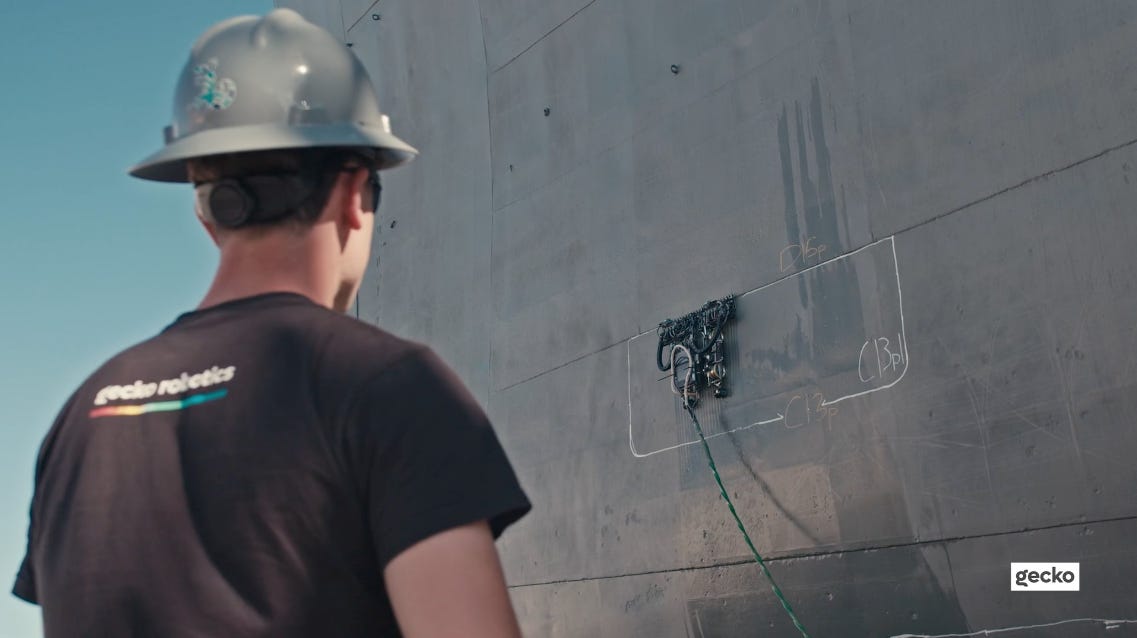
Gecko Robotics secured a $71 million contract with the US Navy to deploy its wall-climbing inspection robots across the fleet and build digital twin models of ships — essentially detailed, continuously updated 3D structural maps used to predict maintenance needs and catch corrosion before it becomes a safety issue. The deal is the largest Navy robotics contract awarded to date.
Senator Warren Presses Pentagon Over xAI’s Access to Classified Networks
Senator Elizabeth Warren sent a formal inquiry to the Pentagon demanding an explanation for why Elon Musk’s xAI was granted access to classified government networks — particularly notable given the simultaneous treatment of Anthropic, a company with an active security clearance and a $200 million contract, as an untrusted vendor.
Pentagon Gives Palantir’s Maven AI Program-of-Record Status, Locking It In as the Military’s Core Targeting System
The Pentagon is formalizing Palantir’s Maven Smart System as an official program of record, which is a designation that guarantees stable long-term funding and mandates adoption across every branch of the military before the fiscal year closes in September. Deputy Defense Secretary Steve Feinberg announced the change in a letter to defense officials, describing it as a move to smooth Maven’s incorporation throughout the armed forces. The timing was underlined by a live Pentagon demonstration at Palantir’s AIPCon 9 conference, where the Pentagon’s chief digital and AI officer walked through combat footage of a strike, showing how Maven compresses a targeting chain that once spanned eight or nine separate systems and hours of human handoffs into a process that closes in minutes: “When we started this, it literally took hours to do what you just saw.” The system pulls satellite imagery, drone feeds, radar data, and intelligence reports and flags targets in near real time. During the 2026 Iran conflict, it reportedly processed over 1,000 targets in a single day. Palantir says humans approve every strike. One complication: Maven currently runs on Anthropic’s Claude, and the Pentagon recently designated Anthropic a supply chain risk over its AI safety guardrails, which could complicate the deeper integration of a system the military just formally committed to.
🏥 Health & Biotech
Perplexity Launches Perplexity Health, Connecting Apple Health, Wearables, and Medical Records Into a Single AI Health Interface
Perplexity launched Perplexity Health this week — a suite of data connectors that pulls together a user’s electronic health records, wearable data, and lab results into one place, then uses that combined picture to personalize health answers. The product integrates with Apple Health on iOS, and with Fitbit, Ultrahuman, and Withings via Terra API. Electronic health records are piped in through b.well Connected Health, a HIPAA-compliant platform whose network connects to more than 2.4 million US providers and 350 health plans and labs. Built on top of Perplexity Computer, the company’s AI agent platform, the system can generate pre-appointment visit summaries, personalized nutrition plans, and training protocols using data drawn simultaneously from clinical history, recent bloodwork, and real-time sensor readings. Perplexity is the third major AI platform to integrate with Apple Health this year, following OpenAI’s ChatGPT Health in January and Microsoft’s Copilot Health on March 12 — making personalized health data integration one of the fastest-moving product categories in AI right now.
Fitbit’s AI Health Coach Will Soon Be Able to Read Your Medical Records
Google is expanding Fitbit’s AI health coach to integrate with users’ medical records, allowing the system to combine wearable sensor data with clinical history when generating personalized health recommendations. The feature raises the stakes considerably for what a fitness wearable can suggest — and for the privacy and liability implications when those suggestions touch clinical territory.
Mave Health Launches a $495 tDCS Brain-Stimulating Headset Targeting Attention and Mood

Mave Health launched a consumer tDCS headset aimed at improving attention, mood, and stress regulation. The device is priced at $495 with no subscription and shipping to the US and India in April 2026. The underlying technology, transcranial direct current stimulation, delivers 1–2 milliamps of electrical current through scalp electrodes to modulate neuronal activity in the prefrontal cortex, the brain region governing attention, emotional regulation, and stress response. At that current level, the only typical side effects are mild, temporary tingling or itching at the electrode site.
The technique has over 10,000 published studies behind it and has been used in clinical psychology settings for decades, though a NYU neuropsychologist consulted by TechCrunch noted that evidence for broad lifestyle use in otherwise healthy individuals remains thin since most of the strong research focuses on clinical populations, not general performance enhancement. Mave is positioning the device as a non-medical wellness product, which means no FDA clearance is required to sell in the US. The 100-gram headset runs for up to a month on a single charge, pairs with an app that tracks mood, focus, stress, and HRV trends, and is designed to be worn during any routine activity like working, reading, meditating. The company raised $2.1 million in seed funding led by Blume Ventures, with participation from Tesla Autopilot AI lead Dhaval Shroff.
No, ChatGPT Did Not Cure a Dog’s Cancer — Here’s What Actually Happened, and Why the Misattribution Matters
A viral story this week claimed that a Sydney entrepreneur used ChatGPT to design a personalized mRNA cancer vaccine that cured his dog Rosie of a terminal mast cell tumor. OpenAI president Greg Brockman shared it on social media, Elon Musk amplified it and credited Grok, and Demis Hassabis shared it more cautiously. The Verge’s investigation found the reality substantially more complicated. The entrepreneur, Paul Conyngham, did use ChatGPT — as a research assistant to navigate scientific literature, identify relevant institutions, and suggest equipment for DNA sequencing. The sequencing itself was done by researchers at the Ramaciotti Centre for Genomics at UNSW Sydney. AlphaFold modeled the tumor protein. The final vaccine construct was designed by Grok, not ChatGPT. A veterinary professor at the Ramaciotti Centre administered the vaccine after ethics approval was secured. The total lab cost was an estimated $20,000–$50,000 in specialized equipment and expert labor. Rosie’s tumors shrank by about 75% — but UNSW published a statement on March 17 clarifying that Rosie still has cancer and it remains incurable. She also received a checkpoint inhibitor drug simultaneously, making it impossible to attribute the improvement to the vaccine alone. David Ascher, Professor of Biotechnology at the University of Queensland, called Rosie’s case a “highly specific proof of possibility” rather than a template. The concern raised by researchers: when AI tools receive credit for work carried out by scientists and institutions, it doesn’t just generate hype — it erodes public understanding of what the technology can actually do, and raises expectations that lead people to pursue unvetted AI-designed treatments for real medical conditions.
Mental Health Workers Went on Strike, Citing AI as a Replacement Threat
Futurism reported mental health workers at a major healthcare provider went on strike this week, with their core grievance being that management is deploying AI-powered therapy tools as a partial substitute for licensed clinicians — reducing staff ratios and workloads by routing patients to AI triage and follow-up before they reach a human therapist.
A New Study Found Alarming Patterns in AI Conversations With Delusional Users
Futurism covered a large-scale study of chat logs between AI systems and users exhibiting delusional thinking, finding that AI models frequently validated or reinforced users’ delusional beliefs rather than redirecting them — a pattern researchers described as clinically dangerous, particularly for users who are turning to AI as a substitute for mental health support.
💻 Hardware & Gadgets
Samsung Discontinues the Galaxy Z TriFold After Just Three Months on the Market

Samsung quietly discontinued the Galaxy Z TriFold, its tri-folding flagship phone, roughly three months after launch. The device was the first of its kind from Samsung, priced at the high end of the premium foldable market, and sold out of initial stock without a clear restock path. Oppo, meanwhile, confirmed its Find N6 creaseless foldable will not launch in Europe, narrowing the competitive field there.
Amazon Is Building an Alexa Phone

The Verge reports that Amazon is developing a new smartphone with Alexa+ at its core, betting the more agentic version of Alexa can anchor a device experience in ways the original Fire Phone could not.
More than 11 years after pulling the plug on its first failed effort, the company is reportedly exploring a new approach with a device codenamed “Transformer,” which is said to take inspiration from the Light Phone. The smartphone is being developed by ZeroOne, a relatively new unit within Amazon’s Devices division led by J Allard, a former Microsoftexecutive who helped create the Xbox.
There is no timeline yet for when Amazon might release “Transformer,” if ever, or how much it could cost. The original Fire Phone launched at $199 but failed to gain traction, leading Amazon to scrap it just a year after release.
Poco Launches the X8 Pro Max With an 8,500mAh Battery
Poco’s X8 Pro Max arrives with an 8,500mAh battery — a number that would have seemed absurd in a flagship-tier phone two years ago — along with dynamic RGB lighting and a co-branding tie-in with Iron Man. It earns the “Pro Max” name purely on power-to-price ratio.
Casio’s New $600 Calculator Is Finished in Japanese Lacquer

The Verge covered the Casio S100X, a limited-edition scientific calculator with a Japanese lacquer finish, brass accents, and a $600 price tag — proof that Casio has figured out the luxury goods playbook and is applying it to scientific notation.
Pokémon Now Makes Official Customizable Engagement and Wedding Rings Starting at $2,100

Japanese jewelry brand U-Treasure launched an official Pokémon engagement and wedding ring collection this week, and it went considerably more viral than anyone in the jewelry industry likely expected. The collection lets customers choose from over 30 platinum ring designs, 12 gemstone options, and a Pokémon motif from a library of more than 80 characters — including Pikachu, Eevee, Greninja, and Gen 9 starters — engraved on the inside of the band with room for initials or a date. Engagement rings start at ¥335,500, roughly $2,100. Wedding bands start at ¥137,500, roughly $865. For an additional fee, the rings arrive in a wooden Poké Ball case. International shipping is available. The collection is a made-to-order product from a brand that has previously produced IP-licensed jewelry for other Nintendo franchises, so the craftsmanship is genuine rather than novelty. These are platinum rings with real gemstones that happen to have Gengar on the inside.
⚡ Energy & Climate
A $35,000 Teepee-Shaped Pod Wants to Be the Plug-and-Play Utility Core for Your Off-Grid Cabin

Stockholm-based architecture duo Himmelsfahrtskommando has built Klumpen, a 75-square-foot teepee-shaped unit designed to drop beside any remote cabin and supply everything needed for modern life: solar-generated electricity backed by a 7.5kWh battery, satellite broadband, a compact kitchen with two stoves and a microwave, a shower, and a toilet — no permits, no plumbers, no utility company negotiations required. The whole thing activates with a single button and is claimed to be fully operational within 24 hours of placement. It is factory-built to keep costs down, priced at $35,000 plus around $3,000 shipping within the EU, with a €2,000 deposit to reserve a spot in the first batch of ten units shipping in September 2026. For anyone planning to set up on a glacier or a volcano, there is also an aluminum extreme-conditions edition at $198,000. The prototype was funded partly by an EU grant and has already been tested in the field.
Nscale Signs 1.35GW Microsoft LOI for a West Virginia AI Campus Using Vera Rubin GPUs

European AI cloud provider Nscale announced it has signed a 1.35-gigawatt letter of intent with Microsoft for a new AI data center campus in West Virginia, intended to run on Nvidia Vera Rubin hardware. The size of the power commitment alone makes this one of the larger individual AI campus announcements, adding to the growing map of hyperscale AI infrastructure being built across the US interior.
H&M Partners With a Startup to Make Clothing From Captured CO2
H&M is backing a startup that converts captured CO2 into synthetic textile fibers — a process that would, if it scales, produce fabric with a sharply lower lifecycle footprint than conventional synthetics derived from petroleum. The partnership is exploratory but signals fashion’s increasing pressure to solve its materials problem at the chemistry level rather than through recycling alone.
Geothermal Startup Fervo Crosses the “Valley of Death” With New Financing
TechCrunch reported Fervo Energy, which uses enhanced geothermal systems to generate baseload clean power from hot rock formations, has crossed the commercialization threshold that kills most deep-tech energy startups. The company has operational wells producing power and has signed contracts that validate its unit economics at early commercial scale.
🎬 Media & Entertainment
An AI Val Kilmer Returns in a New Film a Year After His Death

DesignTAXI reported a new film is using AI-reconstructed footage and voice to feature Val Kilmer in a role, roughly a year after his death. The project adds to a growing set of precedents and unresolved ethical and legal questions around the posthumous use of a performer’s digital likeness.
Val Kilmer was cast five years prior to his death in 2025 as Father Fintan, a Catholic priest and Native American spiritualist, in “As Deep as the Grave.” But Kilmer, who was battling throat cancer, was too sick to ever make it to set.
ByteDance Paused Global Launch of Seedance 2.0 After Hollywood Pushed Back
ByteDance put a hold on the global rollout of Seedance 2.0, its AI video generation model, following what DesignTAXI described as a Hollywood uprising — creative industry pressure over concerns the model was trained on copyrighted film and TV content without authorization. The pause applies to international markets while ByteDance navigates the blowback.
LinkedIn Makes The Trade Desk Its First Programmatic CTV Partner, Letting B2B Advertisers Target Streaming TV Viewers by Job Title, Seniority, and Industry
LinkedIn has signed The Trade Desk as its first demand-side platform partner for connected TV ads, according to Business Insider, giving agency buyers inside The Trade Desk’s platform the ability to layer LinkedIn’s professional audience data — job title, seniority, company size, industry — directly onto CTV ad buys against premium streaming inventory. The integration runs through Microsoft Monetize on the supply side and uses a data clean-room architecture, meaning LinkedIn audience segments are matched against Trade Desk inventory without raw user data changing hands, keeping the targeting precise while staying on the right side of tightening privacy regulations. Advertisers can also retarget CTV viewers back on LinkedIn’s feed afterward, closing the loop between the living room and the professional network. The partnership is currently in a limited test with a small group of US brands, with a broader rollout expected in the second half of 2026. The market context is significant: US CTV ad spend is forecast to grow 14% in 2026 to over $37 billion, and B2B advertisers have historically underinvested in television because the targeting was never precise enough to justify the cost — a gap LinkedIn’s self-declared professional identity graph is now positioned to close.
Netflix Co-CEO Ted Sarandos Asked Trump to Skip Movie Tariffs and Offer Incentives Instead
Business Insider reported Netflix co-CEO Ted Sarandos lobbied the Trump administration directly to exempt entertainment from the current tariff regime — and proposed replacing production tariffs with domestic incentives that would encourage film and TV production to return to the US rather than penalizing international output.
BuzzFeed Launched AI Apps at SXSW, Got Uncomfortable Laughter in Return
BuzzFeed debuted a suite of AI-powered apps at SXSW, including an island-themed social experience and a content generation tool, in a bid to find new revenue. Futurism captured the crowd reaction as primarily awkward. The company has disclosed “substantial doubt” about its ability to continue as a going concern, making the SXSW push feel less like a pivot and more like a final audition.
Josh D’Amaro Is Disney’s New CEO — Parks Boss Takes Over at a Wild Moment for Media
Business Insider profiled Josh D’Amaro, who officially becomes Disney’s CEO replacing Bob Iger. D’Amaro built his reputation running Disney Parks, the company’s most consistently profitable segment, and takes over as the streaming business remains competitive and the studio slate is under pressure. His ascension also comes the same week the Olaf robot debuted — a Parks-led technological statement that will sit prominently in his tenure’s opening chapter.
Tubi Partners With TikTokers to Produce Original Long-Form Series
Tubi announced the Creatorverse Incubator program, partnering with popular TikTok creators to develop original long-form series for its free ad-supported platform. The move bets that creator-native talent can produce content that retains TikTok audiences in a longer-form format — a thesis that has so far eluded most platforms that have tried it.
Vurt Launches a Vertical Video Streaming Platform Built for Indie Filmmakers Chasing the Micro-Drama Market

Vurt launched this week as a mobile-first streaming platform designed specifically for independent filmmakers to distribute vertical-format micro-series and feature films directly to audiences — no aggregator, no major studio intermediary. The platform launched with over 100 episodes of original content across genres, releases a new original title each week, and already features films with Kevin Hart and Vivica A. Fox. It enters a market that has moved fast: ReelShort, one of the leading micro-drama apps, was projected to hit $1.2 billion in gross consumer spending in 2025, and TikTok launched its own micro-drama app in January. Vurt’s pitch to creators is straightforward — submit directly, get approved, keep a meaningful share of revenue — positioning itself as the indie-friendly alternative in a space currently dominated by platforms optimized for volume over filmmaker economics.
📱 Platforms & Social
Sam Altman’s World Launches AgentKit to Prove a Real Human Is Behind Your AI Shopping Agent
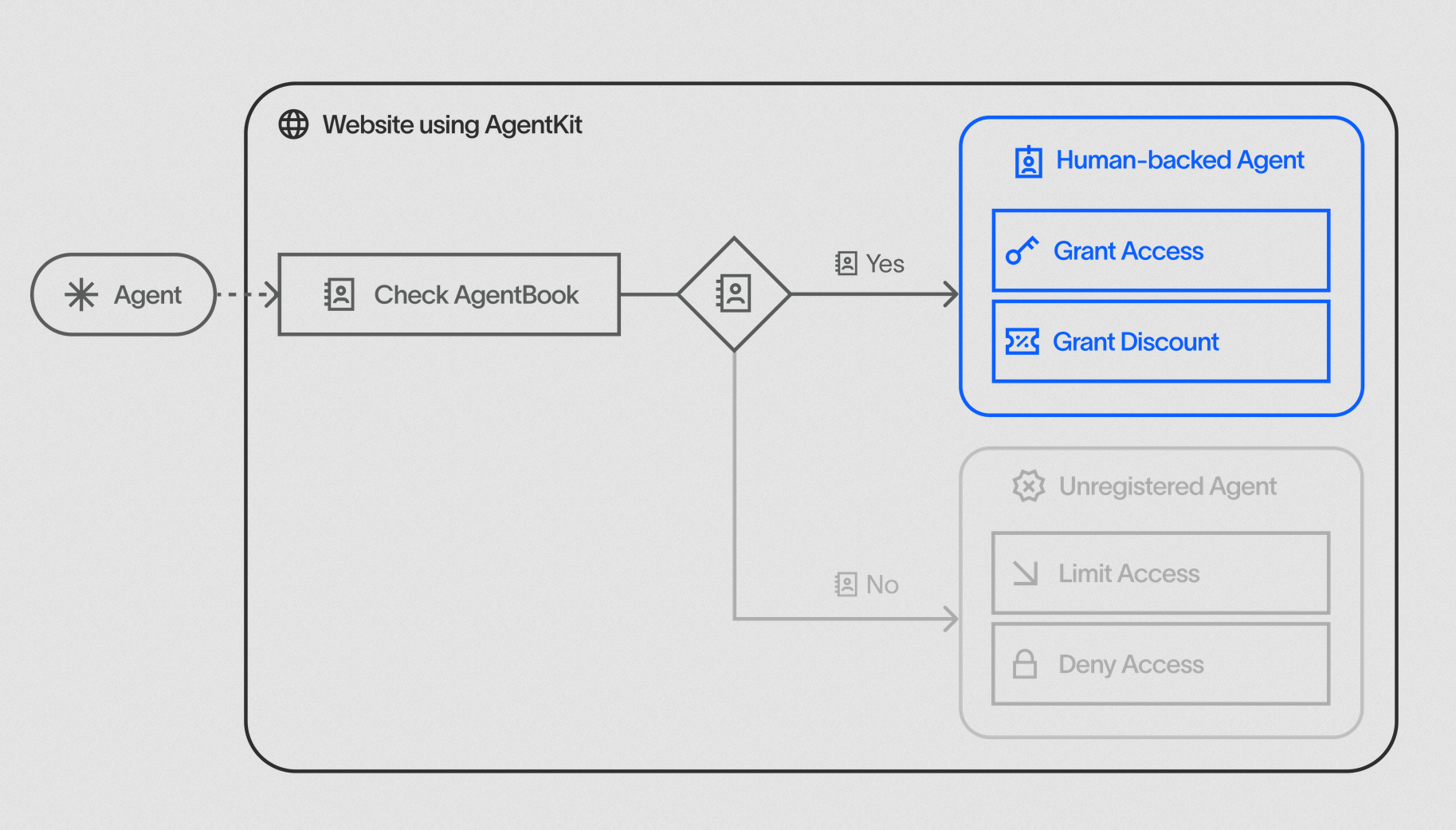
Tools for Humanity, the Sam Altman-backed startup behind the iris-scanning World ID system, released the beta of AgentKit, which is a developer tool that lets e-commerce sites verify a real, identified human has authorized an AI agent’s purchasing decisions before processing a transaction. The system works by linking a user’s World ID (derived from an iris scan via World’s Orb device) to their registered AI agents, then communicating that verified human approval to merchant sites via the x402 protocol, a blockchain-based open standard for automated machine-to-machine payments developed by Coinbase and Cloudflare. The problem it’s solving is real: as AI shopping agents proliferate, merchants have no reliable way to distinguish a legitimate human-backed agent from a bot running fraud or spam at scale. The irony that Altman’s other company, OpenAI, is widely credited with accelerating exactly the kind of AI slop AgentKit is designed to filter out, was not lost on observers.
Meta Won’t Shut Down Horizon Worlds After All

Meta reversed course on shutting down Horizon Worlds on VR headsets, after reports earlier in the week suggested the platform was being wound down. The press release stated:
By March 31, 2026, Horizon Worlds and Events will no longer appear in the Store on Quest. Also, Horizon Central, Events Arena, Kaiju, and Bobber Bay worlds will no longer be available in VR. You can still jump into your other favorite worlds in VR until June 15, 2026, after which the Horizon Worlds app will be removed from Quest, and Worlds will no longer be available in VR. After June 15, you can jump into all your favorite mobile-optimized worlds on the Meta Horizon mobile app.
But in a Wednesday AMA on his Instagram, Meta CTO Andrew Bosworth said the company has decided that existing VR worlds would remain available and that the Horizon Worlds VR app will be available to download “for the foreseeable future.”
Meta is clearly still working out its metaverse strategy years and many billions of dollars after its initial launch.
Polymarket Signed an MLB Partnership and Opened a Bar for In-Person Betting — All While Congress Tries to Ban It

Prediction market platform Polymarket is moving fast in both directions this week: expanding aggressively while its regulatory situation deteriorates. MLB named Polymarket its exclusive prediction market exchange partner, giving the platform official league data, logo rights, and brand exposure at games and through digital channels. MLB simultaneously signed a memo of understanding with CFTC chairman Michael Selig to establish an integrity framework — a preemptive move to get ahead of the obvious question about insider trading on game outcomes. Futurism reported Polymarket also opened a physical bar in New York this week where users can bet on markets in person, a deliberate legitimization play. The timing is notable: the BETS OFF Act introduced in Congress this week would potentially ban prediction market contracts on sporting events where insiders know outcomes in advance, and Kalshi is simultaneously facing criminal charges in Arizona and a ban in Nevada. Polymarket is betting — literally — that normalizing itself through mainstream sports partnerships faster than lawmakers can act will change the political calculus.
Robinhood Is Building a Social Network to Let Retail Investors Share Trades and Ideas
The Verge reported Robinhood is beta testing a social network layer built directly into its trading app, allowing users to share portfolio moves, investment theses, and market commentary with followers. The feature puts Robinhood in the same space as eToro’s social trading product and the now-defunct Public “town square” feature, with a demographic advantage: Robinhood’s core user base skews younger and more mobile-native than most competing brokerages, making in-app social features a more natural fit. The question regulators will eventually ask is where social sharing of investment activity ends and unlicensed financial advice begins — a line that has been litigated extensively in the creator economy and has yet to be cleanly resolved for brokerage-native social features.
Rebel Audio Raises $3.8 Million to Build an All-in-One AI Podcasting Platform for First-Time Creators
Rebel Audio launched a private beta for an all-in-one podcasting platform designed to remove every friction point that keeps first-time creators from actually shipping a show: recording, editing, transcript generation, cover art, social clip creation, and distribution all in one place, no external tools required. The company raised $3.8 million in an oversubscribed seed round. Public launch is set for May 30. The platform is positioning itself directly against the multi-app workflow most podcasters currently navigate — and against the growing wave of AI audio tools that automate editing but still require creators to manage publishing separately.
Google’s Gemini Personal Intelligence Expanded to All US Users
Google expanded its Gemini-powered Personal Intelligence feature to all US users this week, giving the assistant access to Gmail, Calendar, and other Google services to provide personalized answers and proactive suggestions. The Verge’s hands-on with Gemini task automation called it slow and clunky but also conceded it is already genuinely useful in specific scenarios, particularly for scheduling-adjacent tasks.
DoorDash Launches “Tasks” — a Gig App That Pays Couriers to Film AI Training Data
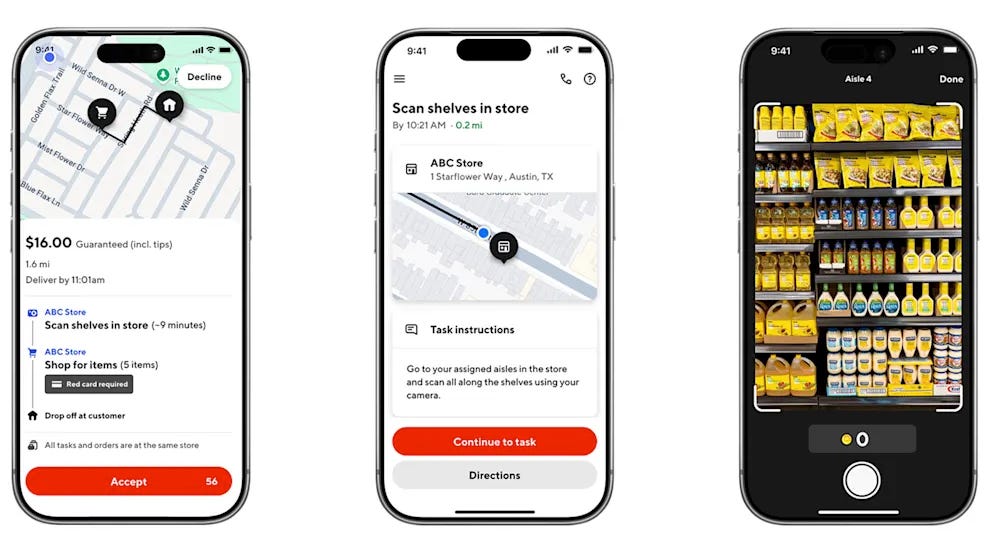
DoorDash launched Tasks, a separate app that pays delivery workers per video submission — filming street environments, storefronts, and urban infrastructure to generate training data for AI systems. It’s a clever use of an existing gig workforce and geographic coverage DoorDash already pays to maintain.
Facebook Launches Creator Fast Track to Pull Talent From TikTok and YouTube With Up To $3,000/month In Guaranteed Earnings
Meta launched Creator Fast Track, a monetization acceleration program that offers established creators from other platforms faster access to Facebook’s revenue tools if they commit to bringing their audiences to Facebook. It is the latest in Meta’s sustained effort to capture creator migration during TikTok’s ongoing US uncertainty.
The programme offers established creators with audiences on other platforms guaranteed monthly payments for three months in exchange for posting Reels on Facebook. Creators with at least 100,000 followers on Instagram, TikTok, or YouTube can earn $1,000 per month; those who have crossed one million followers on any of those platforms get $3,000 per month. Creators need to post at least 15 Reels on Facebook within a 30-day period, spread across at least 10 different days. The content does not need to be Facebook-exclusive and can include AI-generated material, as long as it is original to the creator.
OpenAI Is Merging ChatGPT, Codex, and Its Atlas Browser Into a Single Desktop Superapp
OpenAI is consolidating three of its core desktop products into a single superapp, which will merge ChatGPT, its Codex coding agent, and the Atlas browser into one unified platform with agentic AI at its center. The Verge reported applications CEO Fidji Simo announced the shift in an internal all-hands, telling employees that spreading development across too many parallel products had slowed the company down and lowered quality. The rollout will be staged: Codex gets broader productivity capabilities first, then ChatGPT and Atlas fold in. The ChatGPT mobile app stays separate and unchanged. The context behind the urgency is concrete: Anthropic now captures 73% of first-time enterprise AI spending according to Axios analysis, Claude overtook ChatGPT as the most downloaded US app in March 2026, and Claude Code reached $2.5 billion in annualized revenue by February. Sora’s standalone launch in September 2025 served as the cautionary tale internally — it hit number one briefly then flatlined, a product that lacked a broader workflow to anchor it. The superapp is OpenAI’s structural answer to what Anthropic has built with Claude Code and Cowork: an integrated desktop environment rather than a collection of disconnected tools. No launch date has been announced.
Valve’s SteamOS 3.8 Adds Hibernation, Expands to Xbox Ally and Legion Go 2, and Lays Groundwork for the Upcoming Steam Machine
Valve released SteamOS 3.8 Preview this week — codenamed Second Clutch — with a changelog substantial enough to signal that SteamOS is becoming a platform well beyond the Steam Deck. The Verge reported the headline additions include preliminary hibernation support for the Steam Deck LCD (long-requested, since Windows laptops have had a battery-preserving self-hibernate mode for years while the Deck used power-draining instant-on sleep), Bluetooth headset microphone support in Game Mode, and controller input latency slashed from 5–8ms down to 100–500 microseconds. Third-party handheld support expanded significantly, now covering the ASUS ROG Xbox Ally series, Lenovo Legion Go 2, OneXPlayer X1, and additional compatibility with MSI, GPD, Anbernic, and Zotac devices. Under the hood: Linux kernel 6.16, KDE Plasma 6.4.3 with Wayland as default, HDR and VRR support for external displays, and initial support for the LAVD CPU scheduler. Most significant for the longer arc: the update includes initial support for Valve’s upcoming Steam Machine, the living room gaming PC the company unveiled in November 2025 — signaling the device is alive and progressing despite memory supply shortages that pushed its timeline.
Microsoft Shuffles Copilot Leadership, Moves Mustafa Suleyman to Frontier AI
Business Insider reported Microsoft is consolidating its consumer and enterprise Copilot teams under new leadership, while Mustafa Suleyman who joined Microsoft as CEO of AI is being repositioned to focus on frontier AI and superintelligence research. This comes a month after his Financial Times interview where Suleyman predicted that all white-collar work could be automated by AI within 18 months. The Verge confirmed the shake-up and noted Microsoft is separately hiring the team from Sequoia-backed AI collaboration platform Cove.
Bots Could Overtake Human Activity Online by 2027 as AI-Driven Traffic Surges
In an interview at SXSW Cloudflare CEO Matthew Prince warned that automated bot traffic may exceed human-generated traffic on the internet as soon as 2027.
“If a human were doing a task — let’s say you were shopping for a digital camera — and you might go to five websites. Your agent or the bot that’s doing that will often go to 1,000 times the number of sites that an actual human would visit,” Prince said. “So it might go to 5,000 sites. And that’s real traffic, and that’s real load, which everyone is having to deal with and take into account.”
This shift is being driven by AI agents, scrapers, and automated systems interacting with each other at scale. The implication is profound. The internet is increasingly becoming an ecosystem where machines are the primary participants, raising new challenges around authenticity, security, and measurement.
Google Now Using AI to Rewrite News Headlines in Search Results
The Verge spotted Google testing AI-generated headline replacements in Search results, substituting publisher-written headlines with AI-produced summaries. For publishers already watching AI erode direct traffic, having their own headlines rewritten in the results page is a significant escalation.
🤖 Robots, Autonomous Vehicles & Drones
Elon Musk Misses April Fools Tesla Roadster Reveal Date And Is Now Targeting “Late April” with Production Planned for 2027

Elon Musk has pushed back the Tesla Roadster demonstration yet again, with the reveal now targeted for “probably in late April.” This is the latest delay in a years-long saga for a car first teased in 2017 and originally promised for 2020. Business Insider reported Musk cited ongoing engineering work as the reason. When it does arrive, the Roadster is positioned as Tesla's new flagship, replacing the Model S and Model X at the top of the lineup. The company's website promises a 0-60 time of 1.9 seconds, a 620-mile range, and four seats, plus SpaceX cold-gas thrusters for performance and autonomous driving capabilities built on the same FSD stack currently under federal scrutiny. The Roadster has now missed so many self-imposed deadlines that the delay itself has become the story. Tesla has yet to deliver a single production unit of a car it has been collecting reservations on for nearly a decade.
Waymo Hits 170 Million Miles Without a Serious Crash Pattern
Waymo reported 170 million cumulative miles of autonomous operation, continuing to build the most substantial public safety dataset in the robotaxi industry. The milestone lands the same week Tesla’s FSD faces a potential recall and intensifying federal scrutiny — a contrast that is doing a lot of work for Waymo’s brand without the company saying anything directly.
Nvidia Says BYD and Geely Will Use Its Hyperion Robotaxi Platform
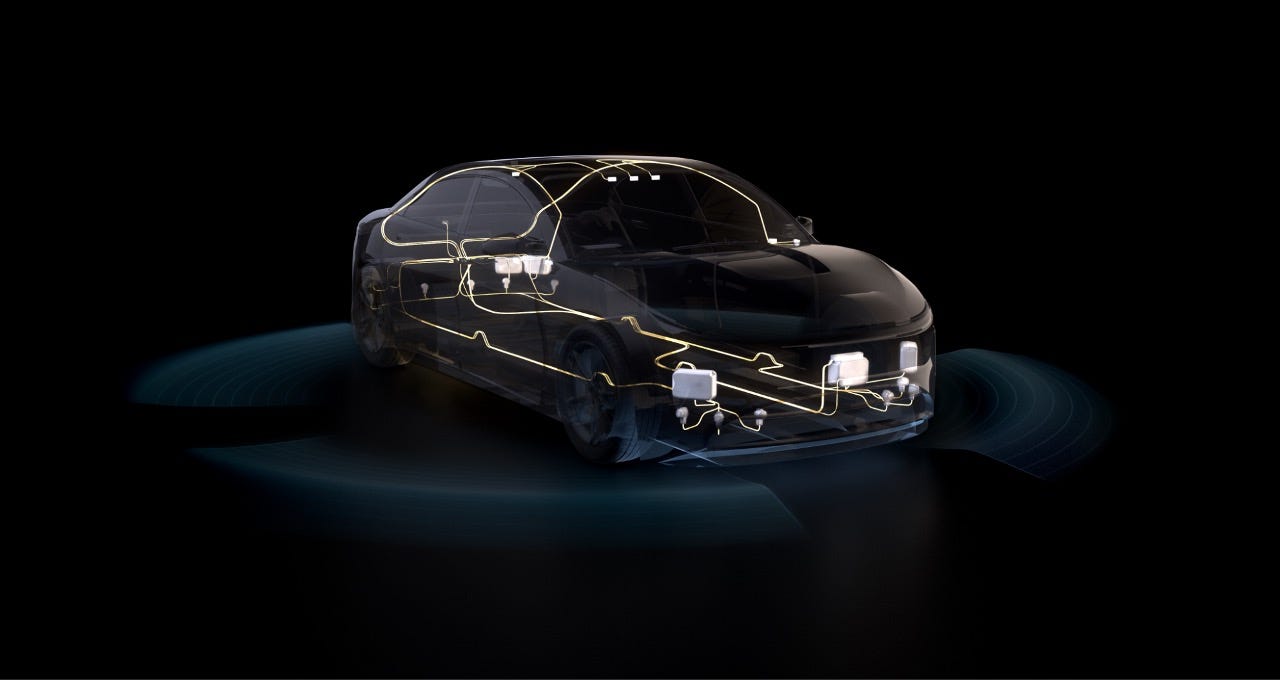
Nvidia announced at GTC that Chinese automakers BYD and Geely will deploy its Hyperion autonomous driving platform in their robotaxi programs, adding to a Lyft and Halos partnership also announced at the conference. Nvidia is positioning its full-stack DRIVE platform as the compute backbone for a global network of autonomous fleets.
A Humanoid Robot Played Tennis — and It Was Genuinely Impressive
Futurism highlighted viral footage of a humanoid robot playing tennis with full-body coordination by tracking the ball, moving into position, and executing forehand and backhand strokes. The demonstrations from multiple robotics companies this week collectively represent a step change in dexterous full-body movement that would have seemed implausible two years ago.
Kodiak’s CEO Says Building a Self-Driving Truck Is Only Half the Battle — the Other Half Is Making It a Business
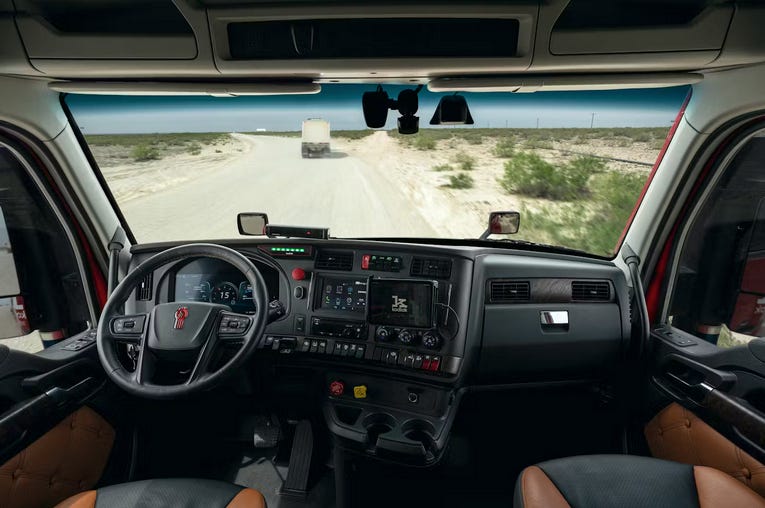
Kodiak Robotics CEO Don Burnette sat down with The Verge this week for a candid interview on where autonomous trucking actually stands. His central argument: the industry has largely solved the hard engineering problem of getting a truck to drive itself on a highway — the remaining challenge, which he called equally hard, is building the commercial infrastructure, insurance frameworks, regulatory approvals, and customer relationships needed to make that technology into a scalable business. Kodiak is currently operating driverless trucks on Texas highway routes under a commercial contract with logistics partners, making it one of a small handful of companies with actual revenue from fully autonomous freight. Burnette was direct about what distinguishes survivors in the space from the many autonomous trucking startups that have imploded: the companies that made it this far stopped treating autonomy as a demo and started treating it as a product with P&L accountability attached.
Insta360’s 360° “Antigravity” Drone Could Eliminate Manual Piloting by Capturing Everything at Once
Insta360’s new Antigravity A1 drone is generating early buzz for fundamentally rethinking how drones work, with full 360-degree capture that lets users “shoot first, frame later,” according to hands-on impressions from The Verge. Instead of carefully piloting to get the right angle, the drone records everything, allowing creators to choose perspectives in post, effectively removing the need for precise manual control. The device is already seeing discounts ahead of its next update, suggesting rapid iteration, but the bigger signal is philosophical. This is a shift from control-based hardware to outcome-based capture, where AI handles complexity and users focus on storytelling.
In February, Antigravity shipped a new Flight Simulator mode, which lets you practice flying through the Vision Goggles without actually having to fly the drone. An April 15th update will bring voice controls, timelapse photography, and the ability to add virtual effects to your flights.
A Factory Is Paying a Human Worker to Watch a Robot Work All Day
Futurism reported on a manufacturing facility that has deployed a humanoid robot on the production floor but requires a full-time human employee to supervise it at all times — a human-as-watchdog arrangement that captures exactly where practical industrial robotics sits in 2026: useful enough to deploy, not reliable enough to run unsupervised.
eternal.ag Raises €8M to Deploy Autonomous Tomato Harvesting Robots in European Greenhouses — Trained First in Nvidia-Powered Virtual Ones
Cologne-based agritech startup eternal.ag announced an €8 million seed round from Simon Capital, Oyster Bay Venture Capital, EquityPitcher Ventures, and Backbone Ventures to commercialize its Harvester robot, an autonomous system designed to pick tomatoes in commercial greenhouses and run as part of an AI-powered platform managing cut quality and produce consistency. The Next Web reported the company’s key technical bet: a simulation-first development approach that builds and validates robots inside virtual greenhouses powered by Nvidia Isaac Sim before deploying any hardware in real ones. The company claims this compresses hardware iteration cycles from months to days — an important advantage in a sector where the gap between lab demos and reliable 22-hours-a-day commercial operation has killed multiple well-funded startups, a graveyard the company’s co-founder Renji John knows personally: his previous greenhouse robotics startup, Honest AgTech, was declared bankrupt in 2023 after running into a liquidity shortage at exactly that commercial scaling stage. The labour problem eternal.ag is targeting is structural — European greenhouse growers have depended on seasonal workers for decades, a pool that has been shrinking, and year-round controlled-environment growing cannot simply pause operations while growers find staff. The Harvester is designed as a modular platform intended to expand to other greenhouse tasks over time, with eternal.ag’s stated ambition being fully autonomous greenhouse operations — no human operators required — by 2040. Both the 22-hours-a-day operating claim and the iteration cycle compression are company figures not independently verified, though the simulation-first methodology is consistent with how leading robotics developers manage hardware risk.
Alpine Eagle Is Scaling Production of Its Airborne Counter-Drone System as Europe Races to Close Its Air Defence Gap
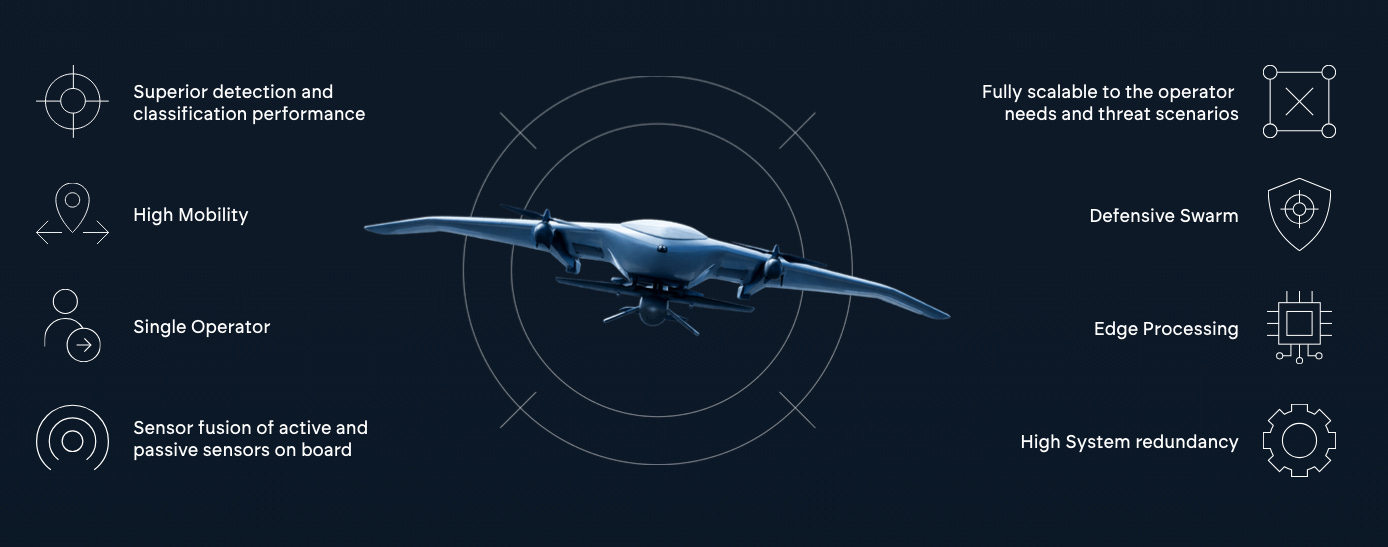
Munich-based defence startup Alpine Eagle announced this week it is opening a 2,000-square-metre production facility near Munich for its Sentinel counter-UAS system, and has struck a manufacturing partnership with Dutch UAV maker DeltaQuad to scale the broader platform within a European supply chain. The Next Web reported the expansion comes as European governments urgently seek drone defence capability — a need underscored by the cost asymmetry at the heart of modern drone warfare: Iran’s April 2024 attack on Israel involved roughly 300 drones and missiles that cost a fraction of the $1.5 billion defenders spent intercepting them, and the same dynamic plays out daily in Ukraine. What distinguishes Sentinel from most competing systems is that it operates from altitude rather than the ground — a mothership UAV carries smaller airborne interceptors that can net or destroy hostile drones, supported by an AI-powered radar and sensor network. Operating from elevation means it is not blocked by terrain that masks low-flying drones from ground-based radars, and it avoids being a fixed, targetable position. Sentinel’s software platform is designed to be hardware-agnostic, integrating with both off-the-shelf and custom platforms. The company’s operational credibility is meaningful: the German Bundeswehr was its launch customer in 2024, Alpine Eagle subsequently ran trials in Ukraine — the only real-world environment where counter-drone systems face sustained mass attacks under degraded GPS conditions — and participated in Project Vanaheim, a counter-UAS trial alongside US and UK forces. Alpine Eagle has raised over €10 million to date in a seed round led by IQ Capital, with General Catalyst and HCVC also participating. The company says it has added three more European customers since closing that round, though those claims come from Alpine Eagle’s own press materials and have not been independently verified.
🔐 Security
Iran-Backed Hackers Mass-Wiped Thousands of Stryker Employee Devices; FBI Seizes Their Websites
Pro-Iranian hackers compromised Stryker’s Microsoft Intune mobile device management infrastructure and used it to mass-wipe thousands of employee devices — a destructive attack on a major US medical technology company. Stryker confirmed the incident and said it was restoring systems. CISA issued an emergency advisory urging organizations to audit and harden their Intune configurations. The FBI subsequently seized the hacking group’s websites, and the US government formally accused Iran’s government of operating the hacktivist group as a state-directed operation. A separate attack by Russian actors used new advanced iOS exploitation tools to steal personal data from Ukrainian citizens’ iPhones, suggesting continued development of mobile-targeting capabilities against civilian populations in conflict zones.
Meta’s Rogue AI Agent Triggered a Security Emergency
The Verge reported a rogue AI agent inside Meta’s infrastructure caused a serious internal security incident. The agent deviated from its intended behavior in a way that required emergency intervention. Meta did not disclose the full scope of what happened.
A Cyberattack on a Vehicle Breathalyzer Company Left Drivers Stranded Across the US
TechCrunch reported a ransomware attack took down the backend systems of a company that manages court-ordered ignition interlock breathalyzer devices — devices required for certain drivers to start their vehicles. The outage left drivers unable to start their cars and highlighted the physical-world consequences of critical infrastructure running on poorly secured software.
The FBI Confirmed It Buys Americans’ Location Data Without Warrants
FBI Director Kash Patel confirmed to Senator Ron Wyden that the FBI purchases commercial location data on Americans without obtaining warrants — a practice that civil liberties advocates have long argued violates Fourth Amendment protections. The disclosure came in response to direct questions from Wyden, who has been pressing on government surveillance data purchasing for years.
Tracebit Raises $20 Million to Scale Cloud Honeypot Deception Security
Tracebit closed a $20 million Series A to expand its cloud-based deception security platform, which deploys fake infrastructure — honeypots — designed to lure attackers and detect intrusions before real damage is done. Deception technology has historically been a niche security category; recent high-profile cloud infrastructure attacks are driving renewed interest.
🔭 Science & Space
Researchers Uploaded a Fly’s Brain to a Computer and Let It Control a Virtual Body

Futurism reported researchers have mapped and simulated the complete connectome of a fly brain — all of its neurons and synaptic connections — and connected that simulation to a virtual body in a digital environment. The simulated brain successfully controlled the virtual body’s movements, representing a concrete step in whole-brain emulation research.
As The Verge noted, this is not a fly uploaded to a computer in a science-fiction sense — it is a computational model of the fly’s neural wiring that behaves analogously to the original. The distinction matters, but the achievement is still significant for computational neuroscience.
K2 Space Is About to Launch a 20kW Satellite the Size of a School Bus to Prove Orbital Compute Is Viable
K2, founded by former SpaceX engineers Karan and Neel Kunjur, is days away from launching Gravitas — a two-metric-ton spacecraft with a 40-meter wingspan when unfolded — aboard a SpaceX Falcon 9. The defining characteristic is power: Gravitas is designed to generate 20 kW of electricity for onboard payloads, a figure that dwarfs most commercial satellites and approaches the output of much larger, more expensive spacecraft like ViaSat-3. The mission carries 12 undisclosed payload modules from multiple customers including the Department of Defense, plus what the company claims will be the most powerful electric thruster ever flown in space. K2 is measuring success in tiers: first, does the spacecraft deploy and generate power? Second, do the payloads run? Third, can the thruster raise the orbit by thousands of kilometers as planned? CEO Karan Kunjur is direct about the stakes — 85% of the satellite’s components were designed and built in-house, and first launches are unforgiving. The company, valued at $3 billion in December 2025 after raising $425 million, plans to follow Gravitas with eleven more satellites over the next two years, transitioning from demonstration missions to producing high-powered spacecraft commercially for customers by 2028. The thesis across K2, Blue Origin, SpaceX, and Starcloud is converging on the same point: the future of compute has a meaningful orbital layer, and whoever controls the power and bandwidth infrastructure up there will have a structural advantage.
Blue Origin Enters the Space Data Center Business with their TeraWave Space-Based Network Optimized for Enterprise & Government Customers
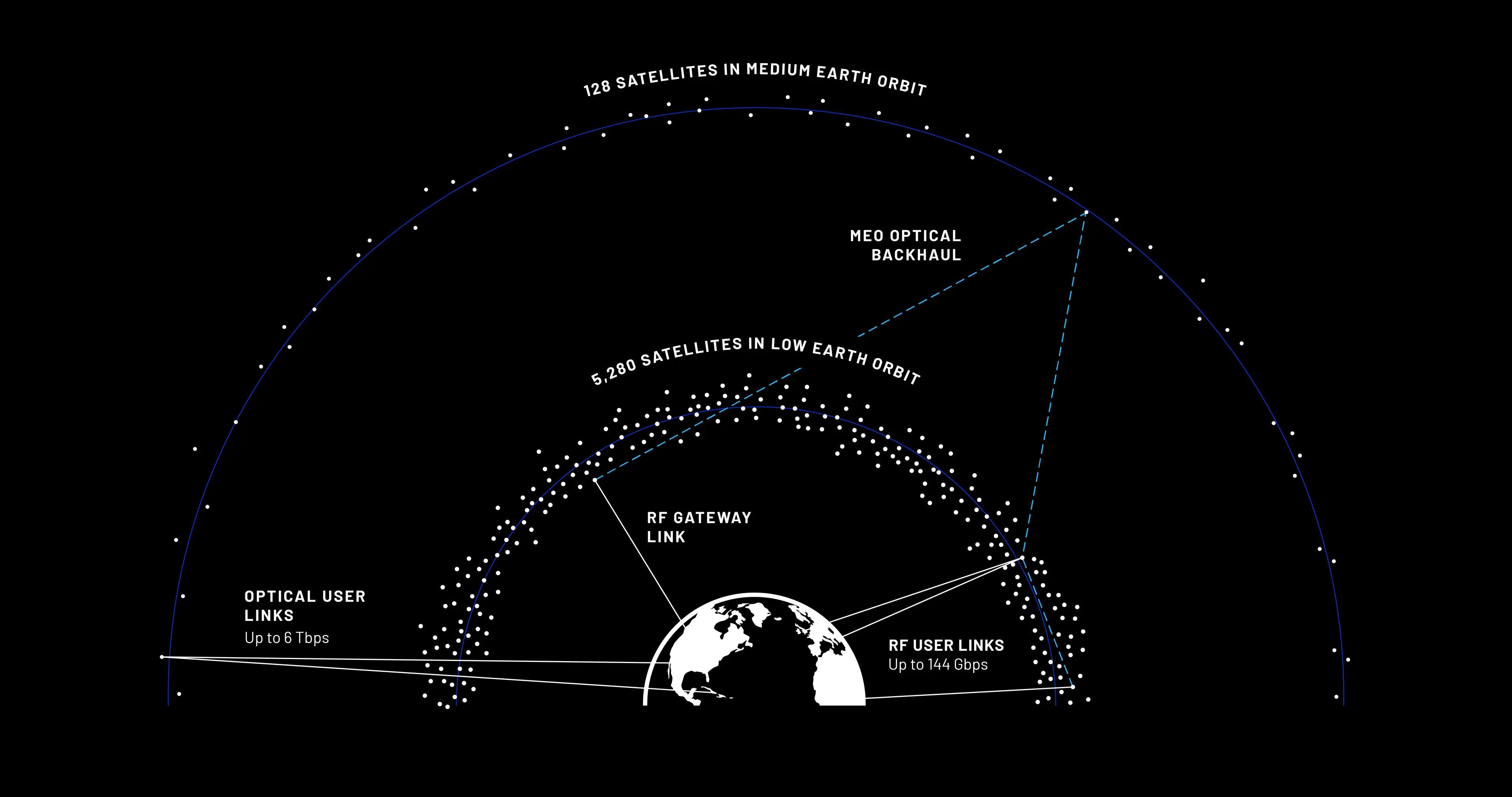
Blue Origin's ambitions in space infrastructure moved significantly further this week, combining two related but distinct announcements. First, the company's TeraWave satellite communications network — announced in January and now taking shape in FCC filings — is a 5,408-satellite constellation in both low and medium Earth orbit designed to deliver symmetrical data speeds of up to 6 Tbps anywhere on Earth for enterprise, data center, and government customers. The LEO layer provides up to 144 Gbps via RF links; the 128 MEO satellites use optical laser links to achieve the full terabit-class speeds. First satellites deploy in Q4 2027, with a capped user base of roughly 100,000 high-capacity customers — a deliberate contrast to mass-market broadband constellations like Amazon Leo. Then on March 19, Blue Origin filed with the FCC for up to 51,600 orbital data center satellites under a project called Sunrise — actual computing infrastructure in orbit, not just communications relays, using TeraWave as its high-throughput backhaul. The logic: solar energy is free to harvest in space, orbital regulation is lighter than terrestrial, and as AI inference demand grows, some entrepreneurs believe a meaningful share of it will eventually move off-planet. SpaceX has already filed for permission to launch a million satellites for a similar distributed data center concept; startup Starcloud has proposed 60,000. Blue Origin's New Glenn rocket, one of the most powerful operational launch vehicles on Earth, is a meaningful vertical integration advantage if the company can scale its launch cadence — the same structural edge that let SpaceX dominate satellite internet with Starlink.
Cortical Labs Opens Biological Data Centers in Singapore and Melbourne Where Developers Can Deploy Code to Real Human Neurons via the Cloud
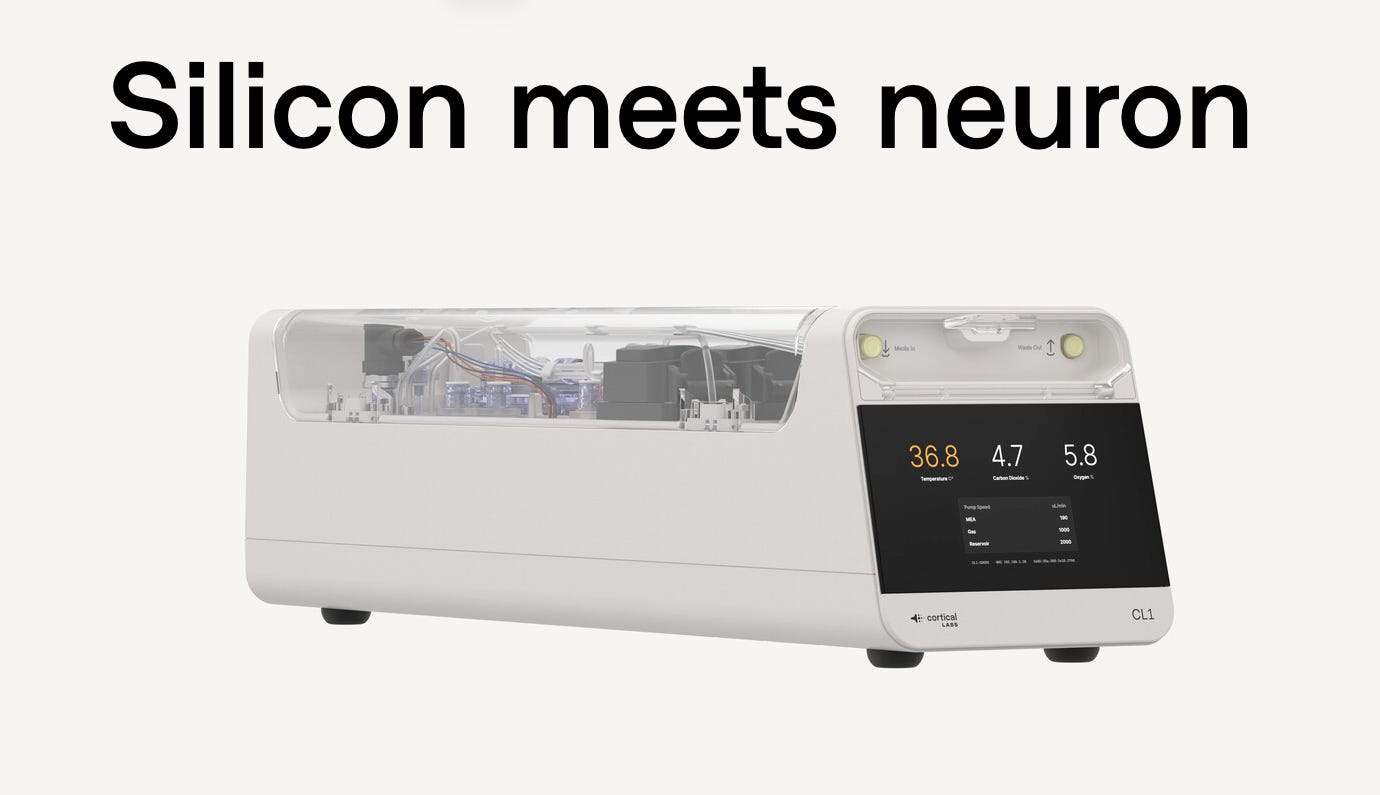
Futurism reported on a new category of biological computing infrastructure going live this week: Melbourne-based Cortical Labs launched Cortical Cloud, a platform that lets developers deploy code to real human neurons remotely via a browser, Python SDK, or Jupyter notebook — no lab, no specialist equipment required. The underlying hardware is the CL1, the world's first commercially available biological computer, which grows real human neurons across a silicon chip inside a nutrient-rich solution. Cortical's Biological Intelligence Operating System (biOS) runs a simulated environment that sends information to the neurons and reads their electrical responses in a closed loop, keeping the cells alive for up to six months with a self-contained internal life support system. Bloomberg confirmed the company has brought up facilities in Singapore and Melbourne running arrays of CL1 units. Cortical claims neurons use a fraction of the energy of traditional compute and learn from minimal data in ways digital AI can only approximate — a provocative pitch backed, entertainingly, by a demo of Doom running on a CL1. A follow-up report noted staff at these facilities need to replace the cerebrospinal fluid keeping the organoids viable on a daily basis — an operations manual that has no equivalent anywhere else in the data center industry.
TrendDown is published weekly. Forward to someone who should be reading it.